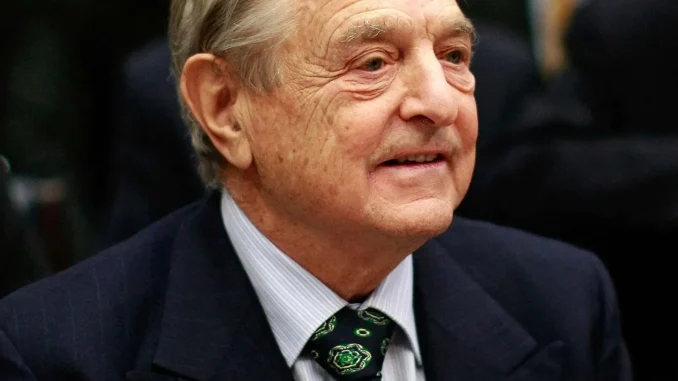
George Soros is a Hungarian-American investor, philanthropist, author, and public intellectual whose influence spans global finance, politics, and civil society. Rising to prominence as one of the most successful hedge fund managers of the late 20th century, Soros is widely known for his global macro investing approach and for his role in the 1992 currency crisis that forced the United Kingdom to exit the European Exchange Rate Mechanism an event that cemented his reputation in financial history.
Beyond investing, Soros is one of the world’s most significant philanthropists. Through the Open Society Foundations, he has committed tens of billions of dollars to causes related to democracy, human rights, education, public health, and the rule of law across dozens of countries. His philanthropic work, inspired by the ideas of philosopher Karl Popper, centers on the concept of the “open society,” emphasizing transparency, pluralism, and institutional accountability.
By 2025, Soros has largely stepped back from active business and organizational leadership, transferring control of his philanthropic network to the next generation while remaining a prominent symbolic figure. Admired by supporters and sharply criticized by opponents, he remains one of the most debated individuals of the modern era an enduring figure whose life reflects the intersections of markets, ideas, power, and global change.
George Soros Profile Summary
| Category | Details |
|---|---|
| Full Name | George Soros (born György Schwartz) |
| Date of Birth | August 12, 1930 |
| Age (2025) | 95 |
| Place of Birth | Budapest, Hungary |
| Nationality | Hungarian-born American |
| Education | London School of Economics (BSc, MSc – Philosophy) |
| Known For | Hedge fund investing, global macro strategy, philanthropy |
| Notable Achievement | 1992 British pound trade (“Black Wednesday”) |
| Investment Legacy | Founder of the Quantum Fund; pioneer of global macro investing |
| Core Investment Idea | Theory of Reflexivity |
| Organizations Founded | Soros Fund Management; Open Society Foundations |
| Philanthropy | Over $32 billion committed to global civil society causes |
| Political Role | Major political donor and advocate; never held public office |
| Books | The Alchemy of Finance, Soros on Soros, The Crisis of Global Capitalism, others |
| Marital Status | Married to Tamiko Bolton |
| Children | Five |
| Current Role (2025) | Retired; advisory and symbolic influence only |
| Estimated Net Worth (2025) | Billions of dollars |
| Website | www.georgesoros.com |
George Soros Early Life and Family Background
George Soros was born György Schwartz on August 12, 1930, in Budapest, Hungary, into a middle-class Jewish family. His father, Tivadar Soros, was a lawyer, writer, and former prisoner of war who played a decisive role in protecting his family during one of Europe’s most dangerous periods. His mother, Erzsébet, managed the household and supported the family through years of instability.
Soros spent his childhood in Hungary during a time of profound political upheaval. In 1944, Nazi Germany occupied Hungary, and anti-Jewish persecution intensified rapidly. To survive, the family adopted false identities and relied on forged documents and carefully arranged guardianships. These experiences living under authoritarian rule, navigating fear, deception, and moral compromise are formative influences on Soros’s later worldview.
After World War II, Hungary fell under Soviet-backed communist control. Disillusioned by the tightening grip of authoritarianism and limited opportunities at home, Soros left Hungary in 1947 at the age of 17. With little money and no guarantee of success, he emigrated to the United Kingdom, setting the stage for his education, intellectual development, and eventual rise in global finance.
This early life marked by survival, displacement, and exposure to both fascist and communist regimes became a central foundation for Soros’s lifelong focus on freedom, open societies, and skepticism of absolute power.
George Soros Education and Philosophical Influences
After leaving Hungary in 1947, George Soros settled in the United Kingdom, where he pursued higher education while supporting himself through a series of manual and service jobs. He enrolled at the London School of Economics (LSE), one of Europe’s leading institutions for economics and social sciences.
At LSE, Soros studied philosophy rather than finance, earning a bachelor’s and later a master’s degree. His intellectual development was profoundly shaped by the philosopher Karl Popper, whose work argued that no system of knowledge or governance can ever be perfectly certain or complete. Popper’s concept of the “open society” one that values critical thinking, pluralism, and the ability to correct errors became a cornerstone of Soros’s worldview.
Soros later described Popper’s ideas as influential not only in shaping his political and moral outlook but also his understanding of markets. The belief that human perceptions can affect reality led Soros to question traditional economic theories that assume rational actors and efficient markets. This philosophical grounding later evolve into his own theory of reflexivity, which challenged orthodox financial thinking.
His time at LSE thus laid the intellectual foundation for both sides of his public life: his unconventional approach to investing and his long-term commitment to promoting open, democratic societies.
George Soros Early Career and Entry Into Finance
After completing his studies in the United Kingdom, George Soros sought to build a professional career in finance, despite having no formal training in economics or investment management. In the early 1950s, he worked in various junior roles within the British financial sector, gaining exposure to international markets and securities trading.
In 1956, Soros emigrated to the United States, where he found greater opportunity in the rapidly expanding postwar financial system. He began working as a securities analyst and trader, holding positions at several firms, including F.M. Mayer, Wertheim & Co., and later Arnhold and S. Bleichroeder. These roles allowed him to develop practical experience in equity analysis, arbitrage, and international investing.
During this period, Soros became increasingly dissatisfied with traditional economic models that assumed markets were always efficient. Drawing on his philosophical background, he began forming the ideas that later become his theory of reflexivity the notion that investor perceptions and biases can influence market fundamentals, creating self-reinforcing trends and sudden reversals.
By the late 1960s, Soros had accumulated enough capital and confidence to pursue his own investment strategy. This phase marked the transition from apprentice to independent investor and set the stage for his rise as one of the most influential hedge fund managers in modern financial history.
George Soros Hedge Fund Career and the Quantum Fund
In the late 1960s, George Soros began to translate his philosophical ideas into practice by launching his own investment vehicles. In 1969, he co-founded what would become the Quantum Fund, initially structured as a small offshore fund designed to give him greater freedom in pursuing unconventional strategies.
Under Soros’s leadership, the Quantum Fund adopted a global macro approach investing across currencies, equities, bonds, and commodities based on broad economic and political trends rather than company-by-company analysis. This strategy allowed Soros to take large, concentrated positions when he believed markets were fundamentally mispricing risk.
Throughout the 1970s and 1980s, the Quantum Fund delivered extraordinary returns, far outperforming most major indices and rival hedge funds. Soros became known for his willingness to change positions quickly, accept being wrong, and cut losses decisively an approach he often summarized with the idea that success depended not on being right, but on recognizing mistakes early.
By the late 1980s, Soros had established himself as one of the most successful and closely watched hedge fund managers in the world. His growing wealth and reputation during this period laid the groundwork for both his most famous financial trade and his later shift toward large-scale global philanthropy.
Black Wednesday 1992: How George Soros Broke the Bank of England
George Soros achieved worldwide recognition in 1992 during the event that became known as Black Wednesday, when the United Kingdom was forced to withdraw the British pound from the European Exchange Rate Mechanism (ERM). At the time, Soros believed the pound was fundamentally overvalued and that the UK government lacked sufficient reserves to maintain its fixed exchange rate.
Through the Quantum Fund, Soros took a massive short position against the pound, betting that it would be devalued. On September 16, 1992, intense market pressure overwhelmed government intervention efforts by the Bank of England, leading to the pound’s exit from the ERM and a sharp currency devaluation.
The trade reportedly generated over $1 billion in profit for Soros’s fund and earned him the enduring media nickname “the man who broke the Bank of England.” While the phrase is symbolic rather than literal, the episode became one of the most famous currency trades in financial history and a defining example of global macro investing.
Black Wednesday cemented Soros’s reputation as a bold, highly influential investor capable of challenging government monetary policy. It also intensified public attention on hedge funds, currency speculation, and the growing power of global capital markets themes that would continue to shape debates around finance and regulation in the decades that followed.
George Soros Trading Strategy and Investment Philosophy
At the core of George Soros’s success as an investor is an unconventional framework that blends philosophy, psychology, and macroeconomics. Rather than relying solely on traditional models of market efficiency, Soros developed what he called the theory of reflexivity, which argues that market participants’ beliefs and actions can influence underlying economic fundamentals, creating self-reinforcing trends and abrupt reversals.
Soros’s trading strategy emphasized identifying situations where perception and reality diverged. When he believed a market narrative was unsustainable whether in currencies, interest rates, or equities he was willing to take large, concentrated positions. This approach was especially evident in foreign exchange markets, where policy constraints and political decisions often created mispriced risks.
Risk management played a central role in his philosophy. Soros was known for acting decisively when a position moved against him, cutting losses quickly rather than defending a flawed thesis. He famously argued that the key to successful investing was not avoiding mistakes, but recognizing and correcting them faster than others.
Unlike systematic or rule-based traders, Soros relied heavily on judgment, flexibility, and intuition informed by global events. His methods influenced generations of macro investors and remain widely studied, though Soros himself has repeatedly cautioned that his approach cannot be reduced to a simple formula or mechanical trading system.
George Soros Forex Trading and Famous Currency Bets
By the late 1990s and early 2000s, George Soros began gradually stepping back from day-to-day trading activities. After decades of intense involvement in global markets, he reduced his direct role in managing positions at the Quantum Fund, citing both personal considerations and a desire to focus more fully on philanthropy and public affairs.
In 2011, Soros formally converted his hedge fund operations into a family office, closing them to outside investors. This move effectively marked his retirement from active hedge fund management, though the firm later operating as Soros Fund Management continued to manage his personal wealth and that of his family.
Even after stepping back, Soros remained intellectually engaged with markets, frequently commenting on economic risks, financial crises, and geopolitical instability through essays, interviews, and public lectures. His views on bubbles, financial regulation, and systemic risk continued to attract attention, particularly during periods of global economic stress.
This transition phase reflected a broader shift in Soros’s priorities: from building wealth through investing to deploying that wealth in support of long-term social, political, and institutional change around the world.
George Soros Philanthropy and the Open Society Foundations
Philanthropy became the central focus of George Soros’s public life as he moved away from active investing. Beginning in the late 1970s, he started funding educational and cultural initiatives in Eastern Europe, initially supporting academic exchange and access to information behind the Iron Curtain.
These efforts eventually evolved into the Open Society Foundations (OSF), a worldwide network of grant-making organizations dedicated to promoting democracy, human rights, freedom of expression, public health, and the rule of law. The foundations take their name from philosopher Karl Popper’s concept of an “open society,” emphasizing transparency, accountability, and pluralism.
Over several decades, Soros committed tens of billions of dollars to OSF, making it one of the largest private philanthropic initiatives in history. OSF has supported causes ranging from independent journalism and legal aid to public health programs, education reform, and anti-corruption efforts in dozens of countries.
Soros’s philanthropic work has earned both praise and criticism. Supporters credit OSF with strengthening civil society and democratic institutions, while critics argue that the scale of his funding gives him outsized influence. Regardless of perspective, his philanthropic impact has become a defining element of his legacy, reshaping how private wealth is used to influence global social and political change.
George Soros Political Influence and Policy Involvement
Through his philanthropy and public advocacy, George Soros became an influential figure in political and policy debates, particularly in the United States and Europe. Rather than holding public office, Soros has exercised influence by funding organizations, research, and campaigns aligned with his views on democracy, civil liberties, and social justice.
In the United States, Soros has been a significant donor to political causes, especially those supporting voting rights, criminal justice reform, immigration policy reform, and judicial elections. His funding has frequently targeted structural issues rather than individual candidates, though he has also supported political campaigns through legally regulated channels.
Internationally, Soros-backed organizations have engaged with issues such as media freedom, anti-corruption efforts, minority rights, and democratic governance. These activities have placed him in direct conflict with authoritarian and nationalist governments, most notably in parts of Central and Eastern Europe, where some leaders have accused him of undermining state sovereignty.
Soros’s political engagement has made him a polarizing public figure. Supporters view his actions as an effort to strengthen open societies and democratic institutions, while opponents portray his influence as excessive or illegitimate. This divide has contributed to his unusually high public profile for a private individual and has positioned him as a central figure in broader debates about money, power, and democracy in the modern world.
George Soros Controversies, Criticism, and Misinformation
As his public profile grew, George Soros became the subject of intense political criticism and misinformation. Much of this controversy stems from the scale of his philanthropy, his support for progressive causes, and his outspoken views on nationalism, authoritarianism, and democratic governance.
Soros has been a frequent target of conspiracy theories, many of which falsely portray him as secretly controlling governments, financial markets, media, or elections. These claims are not supported by evidence and are often recycled across different political contexts. Scholars, journalists, and civil rights organizations have noted that some of these narratives draw on long-standing antisemitic tropes, contributing to their persistence and emotional resonance.
In response to criticism, Soros and the Open Society Foundations have consistently stated that their funding activities are transparent, lawful, and aimed at strengthening civil society rather than exerting covert control. Independent reporting by major news organizations has repeatedly found that allegations of criminal behavior or hidden manipulation lack factual basis.
Despite this, Soros remains a polarizing figure. For supporters, he represents principled resistance to authoritarianism; for critics, he symbolizes elite influence in politics. The intensity of the debate surrounding him has made Soros not only a philanthropist and investor, but also a case study in how misinformation, ideology, and power intersect in the digital age.
George Soros Books and Published Works
In addition to his work in finance and philanthropy, George Soros is a prolific author whose books explore markets, politics, and philosophy. His writings reflect his belief that economic systems and political institutions are deeply shaped by human perceptions, biases, and power structures.
Many of Soros’s books focus on his theory of reflexivity, challenging the idea that markets are always rational or self-correcting. He argues instead that investor behavior can distort fundamentals, leading to bubbles, crashes, and systemic instability. These ideas are discussed both in abstract terms and through real-world market examples drawn from his own career.
Beyond finance, Soros has written extensively on global capitalism, democracy, nationalism, and the future of open societies. His political and philosophical works often warn about the dangers of authoritarianism, market fundamentalism, and weakened democratic institutions, particularly in the aftermath of financial crises.
Notable books by Soros include:
- The Alchemy of Finance
- Soros on Soros: Staying Ahead of the Curve
- The Crisis of Global Capitalism
- Open Society: Reforming Global Capitalism
Collectively, his published works have influenced investors, policymakers, and academics, and they help explain the intellectual framework behind both his trading success and his expansive philanthropic agenda.
George Soros Wife, Children, and Personal Life
He has been married three times. His first marriage was to Annaliese Witschak, with whom he had three children. He later married Susan Weber, an art historian, and the couple had two children before divorcing in 2005. In 2013, Soros married Tamiko Bolton, an education consultant and entrepreneur.
Soros has five children in total, several of whom have been involved in philanthropy, public policy, or business. Most notably, Alexander (Alex) Soros has taken on a leadership role within the Open Society Foundations, signaling a generational transition in the stewardship of Soros’s philanthropic legacy.
Known for an intense work ethic during his investing years, Soros has spoken openly about the physical and psychological pressures of high-stakes finance. In later life, he has shifted toward a quieter routine, dividing his time between family, writing, and continued engagement with global political and social issues.
While intensely debated in public discourse, Soros’s private life is largely characterized by long-term intellectual pursuits, family continuity, and a gradual withdrawal from the spotlight as he enters the final decades of his life.
George Soros Net Worth in 2025 and Financial Legacy
Over the course of his career, George Soros accumulated one of the largest personal fortunes in modern financial history, primarily through global macro investing. At his peak, Soros was ranked among the world’s wealthiest individuals, though his net worth has fluctuated significantly over time due to market performance and large-scale philanthropy.
By 2025, public estimates place his net worth in the single-digit billions of U.S. dollars, a figure that reflects the fact that Soros has already donated the majority of his wealth. Through the Open Society Foundations, he has committed more than $32 billion to philanthropic causes an amount that permanently removed those assets from his personal fortune.
Soros’s financial legacy is not defined solely by the size of his wealth, but by how it was generated and deployed. In finance, he is remembered as one of the most successful hedge fund managers of all time, known for redefining global macro investing and demonstrating the power of currency and policy-driven trades. His emphasis on adaptability, risk control, and intellectual humility influenced generations of investors.
In philanthropy, Soros reshaped expectations around private giving by using his fortune to build long-lasting institutions rather than one-time donations. Together, his investment success and philanthropic strategy have positioned him as a rare figure whose financial legacy extends well beyond markets into global political, social, and historical impact.
George Soros in 2025: Current Status and Public Role
By 2025, George Soros had largely withdrawn from active public and professional life, having completed the transition of both his investment operations and philanthropic leadership. In his mid-90s, Soros no longer participates in day-to-day decision-making, instead maintaining an advisory and symbolic presence within the institutions he founded.
Soros continues to follow global political and economic developments closely, occasionally issuing statements or being referenced in discussions related to democracy, authoritarianism, and international stability. His direct involvement, however, is minimal compared to earlier decades, with operational responsibility firmly in the hands of successors and professional leadership teams.
Despite his reduced role, Soros remains a prominent figure in political discourse. His name continues to appear frequently in media coverage, often as a point of reference in debates about political funding, civil society, and global influence. Much of this attention reflects his historical impact rather than new initiatives personally driven by him.
In practical terms, 2025 represents a period of consolidation rather than expansion one in which Soros’s influence persists through the structures he created, rather than through personal action. His presence is felt less through direct leadership and more through the enduring reach of his financial, philosophical, and institutional legacy.
George Soros Legacy: Historical Impact on Finance and Politics
George Soros occupies a singular place in modern history as a figure whose influence spans finance, philosophy, and global civil society. Among investors and economists, he is widely regarded as one of the most successful hedge fund managers of the 20th century, credited with popularizing global macro investing and challenging conventional assumptions about market efficiency.
In the realm of ideas, Soros’s theory of reflexivity has had lasting impact, offering an alternative framework for understanding financial bubbles, crashes, and systemic risk. While debated within academic economics, the concept has proven influential among practitioners and has gained renewed attention during periods of financial instability.
His philanthropic legacy is equally significant. Through the Open Society Foundations, Soros helped institutionalize a model of large-scale, values-driven philanthropy that operates globally and engages directly with political and social structures. Supporters argue that this work strengthened democratic institutions and civil society; critics contend it concentrated too much influence in private hands. Both views underscore the scale of his impact.
Historically, Soros is likely to be remembered as a polarizing but consequential figure one whose life illustrates how ideas, capital, and power can intersect to shape global outcomes. Whether assessed through his financial achievements or his philanthropic ambitions, his legacy continues to influence debates about markets, democracy, and the role of private wealth in public life.
Conclusion
George Soros stands as one of the most influential and debated figures of the modern era. From surviving totalitarian regimes in mid-20th-century Europe to reshaping global finance and pioneering large-scale political philanthropy, his life reflects the far-reaching impact of ideas combined with capital. By 2025, Soros has largely stepped back from active leadership, but the institutions he built, the theories he advanced, and the controversies he inspired continue to shape discussions about markets, democracy, and power. Whether viewed as a visionary reformer or a polarizing actor, his biography remains central to understanding how private individuals can exert enduring influence on global economic and political systems.
Frequently Asked Questions About George Soros
- How old is George Soros?
George Soros was born on August 12, 1930, making him 95 years old in 2025.
- What is George Soros best known for?
He is best known for:
- His success as a global macro hedge fund manager
- The 1992 British pound trade (“Black Wednesday”)
- Founding the Open Society Foundations
- Developing the theory of reflexivity
- How did George Soros make his money?
Soros made his fortune primarily through hedge fund investing, especially macroeconomic and currency trades executed through the Quantum Fund.
- What is George Soros’s net worth in 2025?
Public estimates place his net worth in the billions of dollars, reflecting that he has donated the majority of his wealth to philanthropy.
- How many children does George Soros have?
He has five children, several of whom are involved in philanthropy or public affairs.
- Who runs the Open Society Foundations now?
Leadership has transitioned to the next generation, with Soros’s son Alexander Soros playing a central governance role.
- Did George Soros write books?
Yes. He has written multiple books on finance, markets, and politics, including The Alchemy of Finance and Soros on Soros.
- What is the theory of reflexivity?
It is Soros’s idea that market participants’ beliefs can influence economic fundamentals, creating feedback loops that drive booms and busts.
- Is George Soros retired?
Yes. He is retired from active investing and day-to-day organizational leadership, maintaining only an advisory and symbolic role.
- Why is George Soros controversial?
He is controversial due to:
- The scale of his political philanthropy
- His opposition to authoritarianism
- Persistent misinformation and conspiracy theories
Read more:
- Frank iTom Biography: Age, Wife, State of Origin, Net Worth & Career
- Seyi Tinubu Wife Biography: Age, Children, Tribe, Career & Personal Life
Be the first to comment