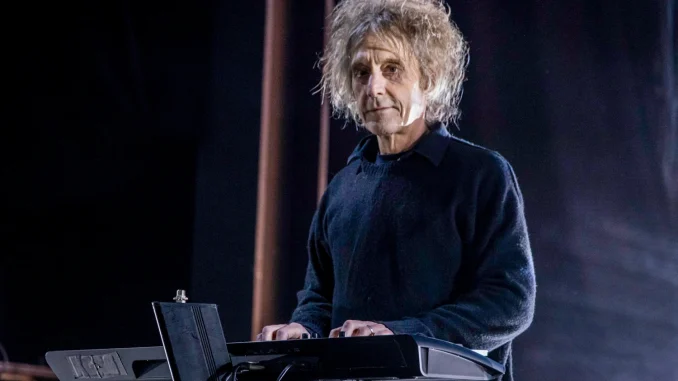
Perry Bamonte was an English musician and multi-instrumentalist best known for his long-standing association with The Cure, one of the most influential alternative rock bands of the late 20th century. Though rarely positioned as the lead in the band, Bamonte played a crucial role in shaping the band’s sound during a pivotal period of its evolution, particularly throughout the 1990s and early 2000s.
Originally joining The Cure from behind the scenes as a trusted member of the touring and technical crew, Bamonte’s journey into the spotlight was gradual and unconventional. His transition into a full band member reflected both his musical versatility and the confidence placed in him by the group’s core members. Over time, he became known for his ability to move fluidly between guitar, keyboards, and other instruments, contributing texture, atmosphere, and balance to the band’s live performances and studio recordings.
Beyond his work with The Cure, Bamonte maintained a deliberately low public profile, favoring creativity over celebrity. He was respected among peers for his musicianship, adaptability, and quiet professionalism, and among fans for his understated but essential presence on stage. His career reflects a broader narrative about collaboration, loyalty, and the often-unseen contributors who help define a band’s enduring legacy.
Perry Bamonte Profile Summary
| Field | Details |
|---|---|
| Full Name | Perry Archangelo Bamonte |
| Also Known As | “Teddy” |
| Date of Birth | 3 September 1960 |
| Place of Birth | London, England |
| Nationality | British |
| Profession | Musician, Multi-instrumentalist |
| Primary Instruments | Keyboards, Guitar, Six-string bass |
| Known For | Long-term association with The Cure |
| Years Active | 1984–2024 (intermittent) |
| Band Association | The Cure (crew member from 1984; full member 1990–2005; rejoined 2022–2024) |
| Notable Albums | Wish (1992), Wild Mood Swings (1996), Bloodflowers (2000), The Cure (2004) |
| Live Releases | Show (1993), Paris (1993) |
| Other Projects | Love Amongst Ruin (bassist) |
| Family | Brother: Daryl Bamonte (tour manager and music industry professional) |
| Date of Death | 27 December 2025 |
| Age at Death | 65 |
| Cause of Death | a short undisclosed illness |
| https://www.facebook.com/perrybamontemusician/ |
Perry Bamonte Early Life and Childhood
Perry Bamonte was born on 3 September 1960 in London, England, during a period when British popular culture particularly music was undergoing rapid transformation.
He spent much of his childhood and teenage years in Essex, particularly around Basildon, an area that later became known for producing influential musicians and music-industry professionals.
Bamonte grew up in a family environment that maintained close ties to the music and touring world. He was the older brother of Daryl Bamonte, who later became a well-known tour manager and creative collaborator for major bands, including The Cure. This familial connection proved significant later in Perry Bamonte’s life, as it helped place him within the professional orbit of the band long before he appeared on stage as a performer.
His later career points to an early interest in music, sound, and visual creativity. Instead of pursuing a traditional route into the music industry, he seems to have learnt his music skills through close exposure to working with musicians and practical, hands-on involvement.
Bamonte’s early years are defined more by absence of spectacle than by dramatic narrative. This lack of public documentation aligns with his later reputation as a reserved, behind-the-scenes figure someone whose impact was felt more through contribution than self-promotion.
This quiet, grounded foundation later shape the way Perry Bamonte entered the music world: not as a sudden breakout artist, but as a trusted presence who earned his place through consistency, adaptability, and long-term involvement.
Perry Bamonte Educational Background
Bamonte’s path appears to have been largely informal and practice-based, He attended local schools in Essex, with a few naming St. Nicholas School during his formative years.
There is no evidence that Bamonte pursued formal higher education in music. Instead, his later proficiency suggests a self-taught or mentor-based learning process, developed through close proximity to professional musicians and live touring environments. His ability to perform competently on multiple instruments particularly guitar and keyboards points to a strong practical understanding of music rather than a strictly academic one.
During his early years working with The Cure’s touring crew, Bamonte expanded his instrumental skills, learning keyboards in particular while already embedded in the band’s day-to-day creative and technical operations. This period effectively functioned as an apprenticeship, allowing him to absorb musical structure, arrangement, and performance dynamics in real-world conditions.
Bamonte’s educational journey is best understood as experiential. Touring, rehearsals, soundchecks, and studio sessions became his classroom. This environment not only sharpened his musicianship but also shaped his reputation as a reliable and adaptable collaborator, qualities that supported his transition from crew member to full band participant.
The absence of a heavily documented academic background did not hinder Bamonte’s development. On the contrary, it reinforced a career built on trust, proximity, and long-term contribution, rather than credentials. His education formal or otherwise was deeply intertwined with the practical realities of professional music-making, preparing him for a role that required versatility, restraint, and technical awareness.
Perry Bamonte Entry into the Music Industry
Perry Bamonte did not enter the music industry through the traditional route of auditions, record deals, or early solo releases. Instead, his career began in a more understated but foundational way through touring logistics and technical support, roles that placed him at the center of live music production long before he became visible to audiences.
By the mid-1980s, Bamonte was working within professional touring environments, most notably as part of the road crew for The Cure. His responsibilities included guitar technician duties, equipment preparation, and on-the-road support positions that required precision, reliability, and deep familiarity with the band’s sound and setup.
This period proved crucial. Touring with an established international band exposed Bamonte to the practical realities of large-scale music production: nightly performances, soundchecks, gear management, and the subtle coordination required between musicians and crew. It also allowed him to observe the band’s creative processes from close range.
Bamonte’s presence within The Cure’s touring circle was reinforced by his family connection to Daryl Bamonte, who was already working in tour management. While this connection helped open doors, accounts consistently suggest that Perry Bamonte maintained his position through competence and trust, rather than favoritism. Over time, he became a dependable and familiar figure within the band’s inner working environment.
Unlike sudden lineup changes common in rock history, Bamonte’s transition toward a musical role was incremental. While still officially part of the crew, he began contributing musically in rehearsals and soundchecks, gradually expanding his responsibilities beyond technical work. His growing comfort with keyboards and guitar positioned him as a flexible asset—someone who could step in where needed without disrupting the band’s dynamic.
This behind-the-scenes apprenticeship distinguishes Bamonte’s early career from that of many contemporaries. Rather than arriving as a featured performer, he earned his place through long-term immersion, learning the band’s repertoire, performance habits, and expectations from the ground up. By the time he was considered for a more formal musical role, he was already deeply integrated into the band’s daily operations.
This phase of his career laid the groundwork for his eventual transition into a full-time performing member an evolution built on proximity, patience, and practical experience rather than sudden visibility.
Perry Bamonte Transition from Crew Member to Full Band Member
The shift of Perry Bamonte from behind-the-scenes support to onstage performer marked one of the most unusual and defining moments of his career. Rather than being recruited through auditions or external recommendations, his elevation to full band member emerged organically from years of proximity, trust, and demonstrated musical capability within The Cure’s inner circle.
By the late 1980s, The Cure’s lineup was undergoing periodic changes, particularly in the keyboard role. During this period, Bamonte was already deeply embedded in the band’s touring and rehearsal environment. His familiarity with the band’s catalog, arrangements, and performance demands positioned him as a natural internal solution when the need for additional musical support arose.
When keyboardist Roger O’Donnell departed around 1990, Bamonte was invited to step into a performing role. This decision reflected not only logistical convenience but also confidence in his musicianship and understanding of the band’s aesthetic.
Although Bamonte had musical experience prior to joining the stage lineup, his transition required rapid development. Accounts frequently note that he expanded his keyboard skills significantly during this period, adapting to the band’s layered and atmospheric sound while also contributing on guitar and other instruments as needed. This flexibility became one of his defining characteristics as a band member.
His background as a technician worked to his advantage. Having spent years handling equipment and observing performances, Bamonte approached live shows with a strong technical awareness, allowing him to integrate seamlessly without disrupting established dynamics.
In 1990, Bamonte officially joined The Cure as a full member. Unlike high-profile additions that often alter a band’s public image, his inclusion was relatively understated, yet it proved essential. He assumed a supportive, textural role, reinforcing arrangements rather than dominating them, which aligned naturally with the band’s evolving sound.
Bamonte’s journey from crew to band member is often cited as a rare example of internal progression within a major touring act. It underscored his reputation as a trusted collaborator, valued for consistency, discretion, and adaptability. By the time he appeared regularly on stage, he was already a familiar presence to the band even if he was a new face to much of the audience.
This transition set the stage for his most visible and influential period, as he became a central part of The Cure’s lineup throughout the 1990s and early 2000s.
Perry Bamonte Musical Contributions
As a full member of The Cure, Perry Bamonte occupied a role that was subtle but essential. His contributions were rarely about virtuoso display; instead, they focused on texture, atmosphere, and structural support elements central to the band’s sound during the 1990s and early 2000s.
Bamonte was a multi-instrumentalist, most frequently performing on:
- Keyboards, where he added ambient layers, pads, and melodic accents
- Guitar, often reinforcing rhythm parts or textural lines
- Six-string bass and auxiliary instruments, depending on live arrangements
This flexibility allowed The Cure to reproduce complex studio arrangements in a live setting without overloading any single member. His parts were designed to blend rather than dominate, strengthening the overall sonic architecture.
Musically, Bamonte was known for restraint. His playing emphasized:
- Atmospheric layering rather than lead melodies
- Consistency and timing, crucial for long, immersive performances
- Adaptability, shifting roles mid-set as arrangements required
Rather than imprinting a personal signature style, he focused on serving the song, a trait frequently cited by fans and commentators as central to his value within the band.
While not typically credited as a primary songwriter, Bamonte contributed to the creative process during recording sessions. His input often came through arrangement ideas, instrumental textures, and collaborative development rather than headline composition credits. This made his influence less visible on paper but audible in the band’s evolving sound.
Bamonte’s background as a technician shaped his live performance style. He brought:
- Strong awareness of sound balance and equipment
- Smooth transitions between instruments
- Reliability during extended tours and demanding setlists
These qualities made him especially important during the band’s large-scale world tours, where consistency night after night was essential.
Within The Cure’s lineup, Bamonte functioned as a musical stabilizer someone who supported core members while enhancing depth and scale. His role exemplified the kind of musician whose impact is felt cumulatively rather than immediately, contributing to the band’s immersive live experience and richly layered recordings.
This period represented the height of his visibility and influence, as he became a fixture of The Cure’s lineup through multiple albums and global tours.
Perry Bamonte Albums and Tours he Contributed
During his years as a full member of The Cure, Perry Bamonte was most closely associated with the group’s expansive touring era and a sequence of albums that defined their sound in the 1990s and early 2000s. His role was especially significant in translating layered studio recordings into immersive live performances.
Bamonte appears on several major releases from this period, including:
- Wish (1992) – A commercially successful album that marked a creative peak for the band in the early 1990s. Bamonte’s presence helped support its dense, guitar- and keyboard-driven arrangements in live settings.
- Wild Mood Swings (1996) – A stylistically diverse record that required flexibility in instrumentation, a strength of Bamonte’s multi-instrumental role.
- Bloodflowers (2000) – Often described as one of the band’s most emotionally cohesive later works, featuring rich atmospheres that aligned closely with Bamonte’s textural approach.
- The Cure (2004) – His final studio album with the band before his departure, representing the end of a long continuous tenure.
While his songwriting credits were limited, his contributions to arrangement and performance were integral to how these albums were realized on stage.
Bamonte was also a key presence on several live releases that captured The Cure at the height of their touring power, including:
- Show (1993)
- Paris (1993)
These recordings document the scale and complexity of the band’s live sound during a period when Bamonte was firmly embedded in the lineup.
Between 1990 and 2005, Bamonte participated in extensive international touring, performing hundreds of shows across Europe, North America, Asia, and beyond. His role was particularly important during long sets that demanded seamless transitions between songs and instruments.
Live performances during this era often featured:
- Extended setlists
- Multiple instrument changes
- Faithful reproductions of studio arrangements
Bamonte’s consistency and adaptability made him a stabilizing presence on stage, especially during tours that spanned months at a time.
Following the touring cycle associated with the 2004 album, Bamonte left the band in 2005 as part of a broader lineup reconfiguration. His departure marked the end of a fifteen-year period in which he had been a constant figure in The Cure’s live and recorded output.
Perry Bamonte Departure from The Cure and Career Afterward
After nearly fifteen years as a full member of The Cure, Perry Bamonte departed the band in 2005, bringing to a close one of the longest and most stable periods of his professional life.
Bamonte’s exit occurred during a broader lineup restructuring led by the band’s core leadership. Bamonte himself did not engage in public commentary about the decision. As a result, most accounts describe his departure in neutral terms as a dismissal or removal connected to creative and organizational changes, rather than personal conflict.
The absence of public dispute or prolonged media attention reflected Bamonte’s longstanding preference for privacy and discretion.
Following his departure, Bamonte stepped away from the high-profile touring cycle that had defined much of his adult life. Unlike many musicians leaving a major band, he did not pursue a visible solo career or attempt to capitalize publicly on his association with The Cure. Instead, he appeared to deliberately lower his public profile, focusing on selective creative work and personal interests.
In the years after 2005, Bamonte remained musically active, though on a smaller and more controlled scale. He later became associated with Love Amongst Ruin, a project connected to former Cure collaborators. In this setting, he played bass guitar, contributing to recordings and performances without returning to the intense spotlight of global touring.
This period highlighted a shift in priorities from large-scale international exposure to collaborative, low-pressure creative environments.
Away from the stage, Bamonte invested time in interests that had long accompanied his musical life. These included:
- Visual art and illustration, with some of his work appearing in niche publications
- Fly fishing, which he reportedly pursued with dedication and enthusiasm
These pursuits reinforced the image of Bamonte as a multidimensional creative figure whose identity extended beyond music alone.
Rather than marking an end, Bamonte’s post-Cure years represented a recalibration. He remained creatively engaged while maintaining personal boundaries, choosing depth and sustainability over visibility. This quieter chapter would later make his return to The Cure all the more unexpected and meaningful.
Perry Bamonte Return to The Cure Band
After more than a decade away from the band, Perry Bamonte made an unexpected return to The Cure in 2022, rejoining the group for a new era of live performances. The move was met with widespread interest from fans and observers, many of whom viewed his return as both a reunion and a quiet acknowledgment of his long-term importance to the band’s live sound.
Bamonte’s return coincided with The Cure’s preparations for the “Shows of a Lost World” tour, their first major touring activity in several years. Rather than being framed as a full-scale reunion announcement, his reappearance was handled with the same understated tone that had characterized much of his career. He resumed his familiar role on guitar and keyboards, integrating smoothly into the existing lineup.
Live Performances and Touring (2022–2024)
Throughout the tour, Bamonte performed at dozens of shows across Europe and North America, helping the band navigate long, varied setlists that drew from multiple decades of material. His presence allowed for:
- Faithful recreation of complex arrangements from the 1990s and early 2000s
- Greater flexibility in live instrumentation
- A sense of continuity between past and present eras of the band
Fans and critics alike noted how naturally he fit back into the group, as if his absence had been a pause rather than a conclusion.
Bamonte’s return was widely interpreted as a restoration rather than a reinvention. For long-time listeners, it reinforced the importance of musicians whose contributions are often felt more than explicitly highlighted. His calm stage presence and supportive playing style complemented the band’s evolving lineup without drawing attention away from the collective performance.
Reports indicate that Bamonte’s last performances with The Cure took place in late 2024, marking the close of his onstage career with the band. These appearances were not announced as farewells, but they later came to be seen as a fitting conclusion to a career defined by loyalty, adaptability, and quiet consistency.
The return of Perry Bamonte to The Cure served as a final chapter that mirrored the beginning of his journey with the band rooted in trust, familiarity, and shared history. It reaffirmed his place within The Cure’s extended legacy and offered audiences one last opportunity to experience his contributions in the setting where they mattered most: the live stage.
Perry Bamonte Relationships and Family Life
Details about Bamonte’s romantic relationships were rarely discussed in interviews but He was married to a woman named Donna, though Bamonte generally kept his personal life private.
What is well established is his close relationship with his family, particularly his younger brother Daryl Bamonte, a respected tour manager and music industry professional. Their connection played an important role early in Perry Bamonte’s career, helping place him within The Cure’s professional orbit. Despite this, accounts suggest Perry earned his position through long-term dedication and competence rather than family advantage.
Those who worked with Bamonte frequently described him as:
- Quiet and reserved
- Highly professional
- Dependable and loyal
- More comfortable contributing than leading
He was known for avoiding public disputes, interviews, or self-promotion, even during periods of major commercial success. This temperament aligned naturally with his behind-the-scenes beginnings and later with his supportive role as a band member.
Outside of music, Bamonte pursued interests that reflected a reflective and creative temperament. His enthusiasm for fly fishing, an activity he reportedly took seriously rather than casually. He also expressed himself through visual art and illustration, contributing artwork to niche publications and creative outlets.
These pursuits reinforced his reputation as someone who valued craft, patience, and solitude qualities that also informed his approach to music.
Unlike many musicians associated with internationally successful bands, Bamonte showed little interest in celebrity culture. Even during peak touring years, he avoided cultivating a public persona beyond his role on stage. This distance from fame helped preserve a sense of normalcy in his personal life and likely contributed to his longevity within demanding touring environments.
Perry Bamonte Illness, Death, and Tributes
In the final chapter of Perry Bamonte’s life, Consistent with his long-standing preference for privacy, only minimal details were shared regarding his health and passing.
In the years leading up to his death, Bamonte remained musically active, most notably through his return to live performances with The Cure beginning in 2022. His participation in extensive touring during this period suggested that he was sufficiently well to meet the physical and emotional demands of international performances well into his sixties.
Official statements described Bamonte’s death as occurring after a short illness. No specific medical condition or diagnosis was publicly disclosed. The absence of detail appears intentional, reflecting respect for personal and family privacy rather than a lack of reporting.
Perry Bamonte died on 27 December 2025, during the Christmas period, at the age of 65. His death was confirmed by The Cure, whose statement highlighted his importance to the band and expressed condolences to his family and loved ones.
News of Bamonte’s passing prompted tributes from fans, musicians, and music journalists, many of whom emphasized:
- His loyalty and long service to The Cure
- His understated but essential musical contributions
- His reputation as a kind, dependable presence within the touring community
Rather than focusing on celebrity, tributes tended to highlight his human qualities professionalism, humility, and quiet dedication.
The limited public detail surrounding Perry Bamonte’s illness and death aligns with how he lived: away from spectacle and personal exposure. His passing marked the end of a career built not on prominence, but on trust, contribution, and longevity qualities that continue to define how he is remembered.
Conclusion: Remembering Perry Bamonte
Perry Bamonte’s life and career reflected the power of commitment, adaptability, and quiet excellence. In an industry often driven by visibility and self-promotion, he followed a different path one rooted in trust, service to the music, and long-term collaboration. From his early years working behind the scenes to his long tenure as a performing member of The Cure, Bamonte embodied the essential contributor: a musician whose presence strengthened the whole without demanding the spotlight. His journey from road crew to stage performer remains a rare and compelling narrative in modern music history.
His return to The Cure later in life brought his story full circle, offering a final chapter defined by continuity rather than nostalgia. Remembered by fans, peers, and collaborators for his reliability, humility, and musical sensitivity, Perry Bamonte leaves behind a legacy measured not in headlines, but in lasting impact one that continues to resonate through recordings, live memories, and the enduring sound of a band he helped sustain for decades.
Frequently Asked Questions (FAQ) About Perry Bamonte
- Who was Perry Bamonte?
Perry Bamonte was an English musician and multi-instrumentalist best known for his long association with The Cure, where he played guitar, keyboards, and supporting instruments during the band’s 1990s early 2000s era and again after rejoining in 2022.
- When was Perry Bamonte born?
He was born on 3 September 1960 in London, England.
- How old was Perry Bamonte when he died?
He was 65 years old at the time of his death in late December 2025.
- When did Perry Bamonte die?
He died during the Christmas period on 27 December 2025.
- What was Perry Bamonte’s cause of death?
His death was reported as occurring after a short illness.
- Was Perry Bamonte married?
He was married to a woman named Donna, though Bamonte generally kept his personal life private.
- Did Perry Bamonte have children?
There is no publicly confirmed information indicating that he had children.
- What instruments did Perry Bamonte play?
He was a multi-instrumentalist, known primarily for:
- Keyboards
- Guitar
- Six-string bass and auxiliary instruments in live settings
- How did Perry Bamonte join The Cure?
He initially joined The Cure in the mid-1980s as part of the road crew and technical team. After several years working behind the scenes, he transitioned into a performing role and became a full band member in 1990.
- Why did Perry Bamonte leave The Cure in 2005?
He left the band as part of a lineup change and internal restructuring.
- Did Perry Bamonte ever return to The Cure?
Yes. He rejoined The Cure in 2022 and performed with them on the “Shows of a Lost World” tour through late 2024.
- Which albums feature Perry Bamonte?
He is associated with several major releases, including:
- Wish (1992)
- Wild Mood Swings (1996)
- Bloodflowers (2000)
- The Cure (2004)
- Live albums such as Show and Paris
- Was Perry Bamonte inducted into the Rock & Roll Hall of Fame?
Yes. He was inducted in 2019 as a member of The Cure.
- What is Perry Bamonte remembered for?
He is remembered for his quiet but essential role in The Cure’s live and studio sound, his professionalism, and his rare journey from behind-the-scenes crew member to long-serving band musician.
Read more:
- Mario Rodriguez Biography: Age, Wife, Movies, Modeling Career, Family & Lawsuit Explained
- Melissa Mae Carlton Biography: What Happened to Her Daughters
Be the first to comment