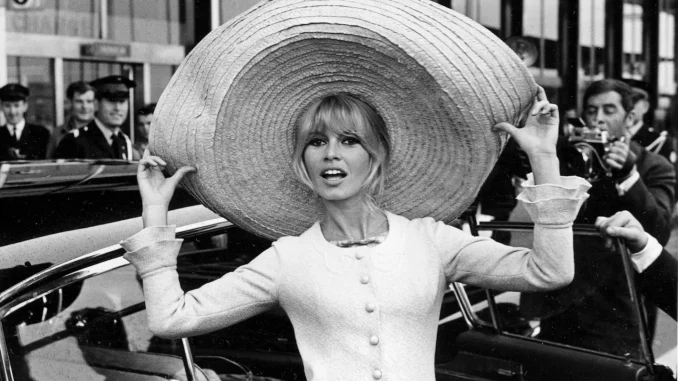
Brigitte Bardot stands as one of the most powerful and complex cultural figures of the twentieth century. Few individuals have so thoroughly reshaped global ideas of beauty, femininity, and celebrity and fewer still have walked away from that power at its peak. Rising to international fame in the 1950s, Bardot became far more than a successful actress; she emerged as a symbol of youthful rebellion, sensual freedom, and modern womanhood in a world still bound by postwar conservatism.
Her breakthrough role in And God Created Woman (1956) did more than launch a career it ignited a cultural shift. Bardot’s screen presence challenged traditional depictions of women in cinema, replacing polished restraint with natural movement, emotional immediacy, and unapologetic desire. Audiences were captivated, critics were divided, and the public quickly became obsessed. Yet behind the image of liberation was a deeply private individual struggling with the psychological weight of fame.
Bardot’s story is not simply one of stardom. It is a life defined by tension between visibility and privacy, admiration and discomfort, freedom and confinement. Her later decision to abandon acting and dedicate herself entirely to animal-rights activism transformed her public identity once again, ensuring that her legacy would remain both influential and controversial. To understand Brigitte Bardot is to confront the full cost of becoming an icon.
Brigitte Bardot Profile Summary
| Field | Details |
|---|---|
| Full Name | Brigitte Anne-Marie Bardot |
| Known As | Brigitte Bardot |
| Date of Birth | September 28, 1934 |
| Place of Birth | Paris, France |
| Nationality | French |
| Profession | Actress, Model, Singer, Animal-Rights Activist |
| Years Active (Film) | 1952–1973 |
| Famous For | Redefining female sexuality in cinema; global sex symbol of the 1950s–60s |
| Breakthrough Film | And God Created Woman (1956) |
| Total Films | Approximately 47 |
| Music Career | Recorded multiple songs and albums in the 1960s; collaborations with Serge Gainsbourg |
|
Death |
28 December 2025 |
| Age She Died | 91 |
| Marital Status | Married four times |
| Spouses | Roger Vadim; Jacques Charrier; Gunter Sachs; Bernard d’Ormale |
| Children | One son – Nicolas-Jacques Charrier (born 1960) |
| Grandchildren | Yes |
| Retirement | Retired from acting in 1973 at age 39 |
| Post-Acting Career | Full-time animal-rights activism |
| Foundation | Brigitte Bardot Foundation (founded 1986) |
| Residence | Saint-Tropez, France |
| Net Worth | $50–65 million |
| Political/Public Controversies | Outspoken statements on immigration and religion; multiple hate-speech convictions in France |
| https://www.instagram.com/brigittebardotpage/ |
Early Life and Childhood
Brigitte Anne-Marie Bardot was born on September 28, 1934, in Paris, France, into a financially comfortable upper-middle-class family. Her father, Louis Bardot, was an engineer and industrialist, while her mother, Anne-Marie Mucel, upheld the values of discipline, propriety, and social order common to the Parisian bourgeoisie of the era. From the outside, Bardot’s childhood appeared privileged, structured, and secure.
Privately, however, Bardot later described her upbringing as emotionally rigid and distant. Affection was limited, expectations were high, and behavior was tightly controlled. This environment shaped her early personality: she was a shy, introverted child who often felt misunderstood and emotionally constrained. Long before fame entered her life, Bardot struggled with feelings of isolation and insecurity.
These early emotional dynamics left a lasting imprint. The contrast between her restrained childhood and the liberated image she later projected would become one of the great paradoxes of her life. Even as the world celebrated her sensual confidence, Bardot remained deeply sensitive, emotionally vulnerable, and uncomfortable with exposure traits rooted in her formative years.
Education and Ballet Training
Bardot’s education followed the path expected of a young woman from her social background. She attended private schools in Paris, including the well-known Cours Hattemer, where academic rigor and discipline were emphasized. While she was not particularly drawn to traditional academic pursuits, her parents strongly valued structured achievement and artistic refinement.
At the age of seven, Bardot began classical ballet training, an experience that would profoundly shape her body, discipline, and sense of identity. Ballet became the central focus of her childhood and adolescence. The demanding routine provided both structure and emotional release, offering her a form of expression that words often did not.
As a teenager, Bardot pursued advanced ballet studies linked to the Conservatoire de Paris, one of France’s most prestigious arts institutions. At that stage, she envisioned a future as a professional dancer, not an actress. Although she would eventually abandon ballet as a career, its influence never left her. Her distinctive posture, fluid movement, and physical expressiveness hallmarks of her screen presence were all rooted in years of disciplined dance training.
Modeling Beginnings and Discovery
Bardot’s transition into public life began almost accidentally. Her ballet training gave her a natural elegance that soon attracted attention beyond the dance studio. As a teenager, she began modeling, initially viewing it as a secondary activity rather than a career direction. Her look was markedly different from established fashion ideals less formal, more spontaneous, and distinctly youthful.
A pivotal moment came when Bardot appeared on the cover of Elle magazine. The exposure brought her to the attention of photographers, producers, and filmmakers who were actively searching for new faces to modernize French cinema. At a time when the industry was shifting toward realism and youth culture, Bardot’s presence felt refreshingly contemporary.
She soon began attending screen tests and auditions, often balancing them alongside her ballet studies. Although she lacked formal acting training, casting directors consistently noted her extraordinary camera presence. It was during this period that she met filmmaker Roger Vadim, whose belief in her potential would prove decisive. This encounter quietly redirected her life, setting her on a path toward cinema and away from the disciplined anonymity of ballet.
Breakthrough and Rise to Fame
The release of And God Created Woman in 1956 marked a seismic shift in Bardot’s life and in popular culture. Directed by Roger Vadim, the film presented Bardot as a sensual, impulsive young woman whose sexuality was neither punished nor hidden. Set against the sunlit backdrop of Saint-Tropez, the film radiated a freedom that shocked conservative audiences and thrilled younger viewers.
International reaction was immediate and intense. In the United States, the film sparked moral debate while drawing massive audiences. Bardot was suddenly a global phenomenon—hailed as a new symbol of female liberation and simultaneously condemned as provocative. Her image spread rapidly across magazines, posters, and screens, transforming her into one of the most recognizable women in the world.
Yet the speed of this transformation left Bardot little time to adjust. Fame arrived with relentless scrutiny. Her body, relationships, and personal choices became public property. The young woman who had once been shy and reserved now found herself trapped inside an image she did not fully control—a tension that would define the rest of her career.
Film Career Highlights
Throughout the late 1950s and 1960s, Bardot starred in approximately 47 films, establishing herself as a major force in European and international cinema. She worked with some of the most respected directors of the era, including Jean-Luc Godard, Henri-Georges Clouzot, and Louis Malle. Her performances ranged from courtroom drama to experimental art cinema and mainstream comedy.
Notable films such as The Truth (La Vérité) and Contempt (Le Mépris) revealed a more introspective side of Bardot’s talent. While critics often debated her technical acting skills, few denied her emotional authenticity and screen magnetism. Her performances relied less on theatrical technique and more on instinct, physical expression, and vulnerability.
Despite her success, Bardot grew increasingly dissatisfied with the roles offered to her. Scripts often emphasized her sensual image at the expense of complexity, reinforcing a persona she felt disconnected from. This growing artistic frustration, combined with the emotional toll of fame, pushed her toward disillusionment with the film industry itself.
Music Career and Popular Culture Influence
Parallel to her acting career, Bardot developed a successful music career, particularly during the 1960s. Her voice soft, breathy, and intimate suited the emerging pop and chanson styles of the era. Music offered her a form of expression that felt less invasive than acting, allowing her to participate creatively without constant visual scrutiny.
Her collaboration with Serge Gainsbourg produced several iconic songs, including “Harley Davidson” and “Bonnie and Clyde.” While critics were divided on her vocal technique, audiences embraced the emotional tone and authenticity of her recordings. Her music reinforced her image as a modern, liberated figure aligned with youth culture.
Beyond film and music, Bardot became a defining fashion icon. Her hairstyle, makeup, clothing, and relaxed elegance influenced beauty standards worldwide. The “Bardot neckline” and her effortless aesthetic remain references in fashion decades later, demonstrating the enduring power of her cultural influence.
Personal Life and Relationships
Bardot’s personal life was intensely public and often tumultuous. She was married four times, including to Roger Vadim, Jacques Charrier, Gunter Sachs, and later Bernard d’Ormale. Each relationship unfolded under constant media scrutiny, amplifying emotional strain and limiting privacy.
She had one son, Nicolas-Jacques Charrier, born in 1960. Bardot later spoke openly about her difficulty with motherhood, stating that she felt unprepared and pressured into the role. Her candid admissions unusual for her generation sparked controversy and led to long periods of estrangement from her son.
Romantic relationships, rather than offering refuge, were often intensified by fame. Bardot described herself as emotionally fragile and overwhelmed by expectations. These personal struggles contradicted her public image and deepened her sense of isolation.
Mental Health, Fame, and Media Pressure
Bardot was among the first major celebrities to openly discuss the psychological cost of fame. She endured relentless paparazzi attention and loss of privacy at a time when few protections existed for public figures. She later acknowledged suffering from severe depression and multiple suicide attempts.
The disconnect between her liberated image and private distress became unbearable. Praise felt invasive, criticism felt crushing, and public expectation felt suffocating. Animals, solitude, and routine became her primary sources of comfort.
By the late 1960s, Bardot had reached a breaking point. Fame, once seen as opportunity, had become a threat to her survival. The conclusion she reached was radical and final: she would leave cinema entirely.
Retirement From Acting
In 1973, at age 39, Bardot permanently retired from acting. The decision shocked fans and industry insiders alike. Unlike many stars, she never returned. She rejected offers, appearances, and honors, choosing privacy over applause.
Her withdrawal was not a retreat from purpose but a reclaiming of control. She settled into a quieter life in Saint-Tropez, determined to redefine herself beyond celebrity.
This decision marked the beginning of her second life one defined not by performance, but by conviction.
Animal Rights Activism
In 1986, Bardot founded the Brigitte Bardot Foundation for the Welfare and Protection of Animals. Animal advocacy became the central mission of her life. She campaigned aggressively against cruelty, fur farming, seal hunting, and industrial abuse.
She invested personal wealth, time, and energy into the cause, writing open letters to world leaders and funding rescue efforts. Her activism was unapologetically militant, earning both admiration and criticism.
For Bardot, this work mattered more than fame ever had. Animals, she said, offered honesty without judgment a refuge from a world that had too often misunderstood her.
Political Views and Controversies
Bardot’s later years were marked by political controversy. Her outspoken views on immigration and religion led to multiple convictions under French hate-speech laws. These statements complicated her public legacy and alienated many former admirers.
She never apologized, insisting on her right to speak freely. This defiance reinforced her reputation as polarizing and uncompromising.
Her legacy thus became inseparable from contradiction compassion for animals alongside rhetoric many found exclusionary.
Later Years, Legacy, and Conclusion
Living reclusively in Saint-Tropez, Bardot spent her later years devoted to animals, solitude, and moral certainty. She rejected nostalgia and celebrity culture, preferring to be remembered for conviction rather than beauty.
Her legacy remains unresolved and powerful. She reshaped cinema, challenged social norms, exposed the cost of fame, and devoted her later life to advocacy. Brigitte Bardot still matters because her story resists simplification. It forces us to confront the price of iconhood and the courage it takes to walk away from it.
Death and Public Reaction
Brigitte Bardot died on December 28, 2025, at the age of 91, at her home in southern France, according to confirmations from the Brigitte Bardot Foundation and international news agencies. The foundation released a statement paying tribute to “an exceptional woman who gave everything and gave up everything for a world more respectful of animals,” emphasizing that her legacy would continue through its ongoing work. A representative of the foundation confirmed that Bardot had been hospitalized the previous month but did not disclose a cause of death, and at the time of the announcement, no funeral or memorial arrangements had been made.
News of her death prompted an immediate wave of tributes in France and around the world. French President Emmanuel Macron described Bardot as “a legend of the century,” praising her films, her global fame, her embodiment of freedom, and her passionate commitment to animal welfare. Media retrospectives highlighted her transformation from one of the most recognizable sex symbols of the 1960s whose image even became the face of Marianne, the national emblem of France to a fiercely committed activist who abandoned fame to defend animals. Her death marked the end of a life that moved from dazzling celebrity to moral conviction, leaving behind a legacy that remains both influential and deeply debated.
Frequently Asked Questions About Brigitte Bardot
- Who is Brigitte Bardot?
Brigitte Bardot is a French actress, singer, model, and animal-rights activist. She became an international icon in the 1950s and 1960s after starring in And God Created Woman and is widely regarded as one of the most influential cultural figures of the 20th century.
- What is Brigitte Bardot famous for?
She is famous for redefining female sexuality in cinema, becoming a global sex symbol in the postwar era, influencing fashion and beauty trends, and later dedicating her life to animal-rights activism after retiring from acting.
- When was Brigitte Bardot born?
Brigitte Bardot was born on September 28, 1934, in Paris, France.
- How old is Brigitte Bardot?
Brigitte Bardot was born in 1934. She is 91 years old as of 2025.
- Is Brigitte Bardot still alive?
As of the latest reliable public information, Brigitte Bardot is alive. Online rumors about her death have circulated periodically but have not been confirmed by credible sources.
- What was Brigitte Bardot’s childhood like?
She grew up in a wealthy but emotionally strict Parisian household. Bardot later described her childhood as disciplined and distant, which contributed to her shyness, sensitivity, and lifelong discomfort with public exposure.
- What education did Brigitte Bardot have?
She attended private schools in Paris, including Cours Hattemer, and received extensive classical ballet training, including studies associated with the Conservatoire de Paris.
- Was Brigitte Bardot trained as a ballerina?
Yes. Ballet was her main ambition as a child and teenager. Her years of classical dance training strongly influenced her posture, movement, and distinctive screen presence.
- How did Brigitte Bardot become famous?
She became famous after starring in And God Created Woman (1956). The film caused international controversy for its portrayal of female sexuality and instantly turned Bardot into a global star.
- What movies is Brigitte Bardot known for?
She is best known for And God Created Woman, The Truth (La Vérité), Contempt (Le Mépris), Viva Maria!, and Dear Brigitte.
- How many movies did Brigitte Bardot make?
Brigitte Bardot appeared in approximately 47 films between 1952 and 1973.
- Why did Brigitte Bardot retire from acting?
She retired in 1973 at age 39 due to severe media pressure, depression, loss of privacy, and dissatisfaction with the film industry and celebrity culture.
- Did Brigitte Bardot have a music career?
Yes. She recorded many songs in the 1960s, including popular collaborations with Serge Gainsbourg. Her music became part of her cultural legacy.
- Is Brigitte Bardot a fashion icon?
Yes. Her hairstyle, makeup, casual elegance, and the off-the-shoulder “Bardot neckline” influenced global fashion and beauty trends and remain iconic today.
- Who was Brigitte Bardot married to?
She was married four times: to Roger Vadim, Jacques Charrier, Gunter Sachs, and later Bernard d’Ormale.
- Did Brigitte Bardot have children?
Yes. She has one son, Nicolas-Jacques Charrier, born in 1960.
- Why was Brigitte Bardot estranged from her son?
Bardot stated publicly that she did not want to become a mother and felt pressured into motherhood. She later acknowledged emotional distance and long periods of estrangement from her son.
- Does Brigitte Bardot have grandchildren?
Yes. She has grandchildren, though her relationship with them is distant.
- Where does Brigitte Bardot live now?
She lives a private, reclusive life in Saint-Tropez, France, largely away from public attention.
- What is the Brigitte Bardot Foundation?
Founded in 1986, the Brigitte Bardot Foundation is a nonprofit organization dedicated to animal welfare, anti-cruelty campaigns, and wildlife protection worldwide.
- What causes does Brigitte Bardot support?
She is best known for animal-rights activism, campaigning against animal abuse, fur farming, seal hunting, and industrial animal exploitation.
- When did Brigitte Bardot die?
Brigitte Bardot died on December 28, 2025, at the age of 91.
- What is Brigitte Bardot’s net worth?
Her net worth is commonly estimated at between $50 million and $65 million.
- What is Brigitte Bardot’s legacy?
She is remembered as a transformative film icon, a symbol of sexual liberation, a lasting fashion influence, a committed animal-rights activist, and a deeply polarizing public figure.
Read more:
- Perry Bamonte Biography: Life, Career, Death and Legacy
- Mario Rodriguez Biography: Age, Wife, Movies, Modeling Career, Family & Lawsuit Explained
Be the first to comment