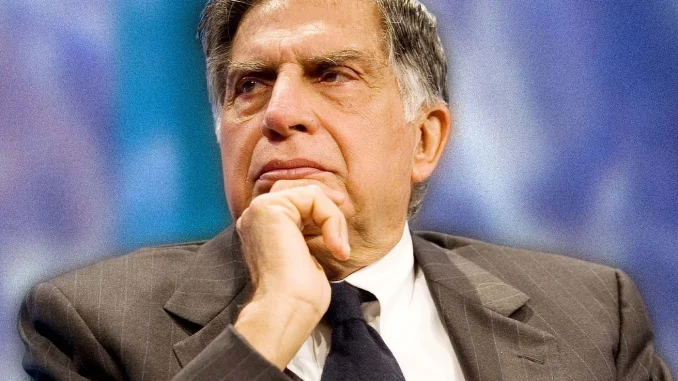
Ratan Tata stands as one of the most respected and transformative figures in modern Indian history. Born into the legendary Tata family, he combined inherited legacy with personal vision to redefine what Indian enterprise could achieve on a global stage. As Chairman of the Tata Group from 1991 to 2012 and briefly again from 2016 to 2017 he led the conglomerate through a period of unprecedented international expansion, landmark acquisitions, and bold innovation, while remaining firmly anchored in ethics and social responsibility.
Beyond boardrooms and balance sheets, Ratan Tata was widely admired for his humility, integrity, and deep commitment to philanthropy. He believed that business success carried a moral obligation to serve society, a principle reflected in the enduring work of Tata Trusts across education, healthcare, and rural development. His life story is not only a biography of corporate leadership, but also a study in character of quiet determination, principled decision-making, and nation-building through enterprise.
Ratan Tata Profile Summary
| Field | Details |
|---|---|
| Full Name | Ratan Tata |
| Date of Birth | 28 December 1937 |
| Place of Birth | Bombay (now Mumbai), India |
| Date of Death | 9 October 2024 |
| Age at Death | 86 years |
| Nationality | Indian |
| Religion | Parsi Zoroastrian |
| Education | Bachelor’s degree in Architecture, Cornell University; Advanced Management Program, Harvard Business School |
| Occupation | Industrialist, Business Leader, Philanthropist |
| Known For | Global transformation of the Tata Group; ethical leadership; philanthropy |
| Position Held | Chairman of Tata Sons (1991–2012; Interim 2016–2017) |
| Family | Tata family; raised by grandmother Lady Navajbai Tata |
| Marital Status | Never married |
| Children | None |
| Major Honors | Padma Bhushan (2000); Padma Vibhushan (2008) |
| Philanthropy | Education, healthcare, rural development, innovation through Tata Trusts |
| https://www.instagram.com/ratantata/ |
Ratan Tata Family & Background
Ratan Tata was born into the illustrious Tata family, one of India’s oldest and most influential industrial lineages. His father, Naval Tata, was a respected executive within the Tata Group, while his mother was Soonoo (Sonoo) Tata. Following the separation of his parents during his childhood, Ratan Tata was raised primarily by his grandmother, Lady Navajbai Tata, whose discipline, compassion, and strong sense of public duty left a lasting imprint on his character.
The Tata legacy itself traces back to his great-grandfather, Jamsetji Tata, who founded the Tata Group in 1868 with a vision rooted in nation-building, ethical enterprise, and social responsibility. Growing up within this environment of privilege balanced by purpose, Ratan Tata absorbed values that would later define his leadership style humility, integrity, and an unwavering belief that business should serve society as much as it serves shareholders.
Ratan Tata Education
Ratan Tata received an international education that strongly shaped his worldview, design sensibility, and leadership approach. He earned a Bachelor’s degree in Architecture from Cornell University in the United States, where he developed an early appreciation for structure, aesthetics, and long-term planning qualities that later influenced his approach to industrial design and corporate strategy.
In 1975, he further strengthened his executive capabilities by completing the Advanced Management Program at Harvard Business School. This program equipped him with high-level strategic and managerial insight, preparing him for senior leadership at a time when the Tata Group was on the brink of major transformation. Together, his architectural training and advanced management education formed a distinctive foundation that blended creativity with disciplined business leadership.
Ratan Tata Career & Leadership
Ratan Tata joined the Tata Group in 1962, deliberately starting his career on the shop floor of Tata Steel rather than in an executive office. This hands-on beginning shaped his deep understanding of industrial operations, workforce realities, and long-term value creation. Over the next three decades, he worked across multiple Tata companies, gaining broad exposure to the group’s diverse businesses before rising to its highest leadership role.
In 1991, he became Chairman of Tata Sons, succeeding J. R. D. Tata at a pivotal moment for both the company and the Indian economy. Liberalization was opening India to global competition, and Ratan Tata led a decisive transformation that reshaped the group’s identity and scale.
Under his leadership:
- The Tata Group evolved from a primarily India-focused enterprise into a globally integrated multinational conglomerate.
- Landmark international acquisitions—including Tetley, Corus, and Jaguar Land Rover—positioned Tata as a serious global player across steel, consumer goods, and automobiles.
- He encouraged innovation, consolidation, and modernization, streamlining the group while expanding into new sectors such as telecommunications, information technology, and advanced manufacturing.
Ratan Tata served as Chairman until 2012, overseeing the most expansive phase of the group’s growth. He later returned as Interim Chairman from 2016 to 2017, providing stability and direction during a leadership transition. His tenure is widely regarded as the era in which the Tata Group decisively stepped onto the world stage while preserving its founding values of ethics, trust, and social responsibility.
Ratan Tata Honors & Recognition
Ratan Tata received some of India’s highest civilian honors in recognition of his exceptional contributions to industry, public life, and nation-building.
- Padma Bhushan (2000): Awarded for distinguished service of a high order, this honor recognized his leadership in Indian industry and his role in strengthening the Tata Group’s national presence during a period of economic change.
- Padma Vibhushan (2008): India’s second-highest civilian award, conferred for exceptional and distinguished service, acknowledged his transformative impact on Indian business, global expansion of the Tata Group, and enduring commitment to ethical corporate governance and philanthropy.
Beyond these national honors, Ratan Tata was widely recognized by academic institutions, global business forums, and international governments for his principled leadership, long-term vision, and belief that business success must be aligned with social responsibility. His reputation for integrity and humility earned him respect that extended far beyond formal awards.
Ratan Tata Philanthropy & Values
Beyond business, Ratan Tata was widely admired for a value system that placed ethics, compassion, and national service at the center of leadership. He consistently maintained that the true purpose of enterprise was not only profit, but the long-term upliftment of society—a belief deeply aligned with the founding philosophy of the Tata Group.
His philanthropic influence was most visible through Tata Trusts, which channel a significant portion of the group’s wealth into public welfare initiatives. These efforts spanned education and scholarships, enabling access to quality learning in India and abroad; healthcare and rural development, supporting hospitals, medical research, clean water, and community infrastructure; and science and social innovation, where he backed research institutions and long-horizon projects with national impact.
In his later years, Ratan Tata also became a strong supporter of startups and entrepreneurship, personally investing in and mentoring young founders across technology, mobility, healthcare, and consumer sectors. This reflected his belief in empowering the next generation to solve real-world problems through innovation.
What set Ratan Tata apart was not just the scale of his philanthropy, but the quiet humility with which it was practiced. He avoided personal glorification, emphasized institutional giving over individual credit, and remained personally approachable despite global stature. His values of integrity, empathy, and nation-building earned him rare public trust, making him not just a business leader, but a moral compass for Indian enterprise and a respected figure worldwide.
Ratan Tata Net Worth
Ratan Tata was often described as one of the world’s most influential business leaders, yet his personal net worth was relatively modest when compared to the vast size of the Tata Group. Estimates during his lifetime commonly placed his net worth in the range of hundreds of millions of dollars, rather than billions.
This distinction existed because the majority of Tata Group ownership is held by charitable trusts, particularly Tata Trusts, which fund large-scale initiatives in education, healthcare, scientific research, rural development, and social welfare. As a result, Ratan Tata’s wealth was largely institutional and philanthropic rather than personal.
Despite overseeing a conglomerate valued at many tens of billions of dollars, Ratan Tata maintained a simple personal lifestyle and consistently emphasized that wealth should serve a broader social purpose. His financial legacy is therefore measured less by personal accumulation and more by the enduring societal impact created through the Tata Group’s charitable and developmental work.
Ratan Tata Legacy
Ratan Tata left behind a legacy that permanently reshaped Indian business and redefined what corporate leadership could stand for. During his tenure, the Tata Group evolved from a largely domestic enterprise into a globally respected conglomerate, competing and succeeding on the world stage while remaining anchored in trust, transparency, and long-term responsibility. His insistence on ethical governance set benchmarks that extended beyond the Tata Group and influenced corporate standards across India.
Equally significant was the cultural legacy he built. Ratan Tata emphasized professionalism over personality, institutions over individuals, and purpose over short-term profit. He strengthened governance structures within the group, encouraged accountability at the highest levels, and demonstrated that scale and ethics need not be in conflict. These principles continue to guide the Tata Group’s leadership philosophy long after his tenure.
Following his passing in October 2024, tributes poured in from global leaders, business communities, and ordinary citizens alike. He was remembered not only for landmark acquisitions and strategic vision, but for his humility, compassion, and unwavering belief that business exists to serve society. Today, Ratan Tata’s legacy endures in the institutions he strengthened, the lives impacted by Tata philanthropy, and the enduring trust associated with the Tata name making him one of the most revered figures in India’s economic and social history.
Conclusion
Ratan Tata embodied a rare blend of vision, integrity, and humanity. He inherited a historic legacy, but it was his own leadership that elevated the Tata Group into a global institution respected not just for its scale, but for its conscience. Through decisive business transformation, unwavering ethical standards, and far-reaching philanthropy, he demonstrated that commercial success and social responsibility can and should coexist.
His life serves as a lasting example of leadership rooted in purpose rather than power. Long after boardroom decisions fade into history, Ratan Tata will be remembered for the values he upheld, the institutions he strengthened, and the quiet dignity with which he led. In Indian industry and beyond, his story remains a benchmark for what principled leadership looks like in practice.
Frequently Asked Questions About Ratan Tata
1. Who was Ratan Tata?
Ratan Tata was an Indian industrialist and philanthropist who led the Tata Group as Chairman from 1991 to 2012, and briefly from 2016 to 2017, transforming it into a global conglomerate.
2. What was Ratan Tata’s age?
He was born on 28 December 1937 and passed away on 9 October 2024 at the age of 86.
3. Did Ratan Tata have a wife?
No. Ratan Tata never married.
4. Did Ratan Tata have a son or children?
No. He had no children.
5. What was Ratan Tata’s family background?
He belonged to the Tata family, founded by Jamsetji Tata. He was raised largely by his grandmother, Lady Navajbai Tata, after his parents separated.
6. What was Ratan Tata’s religion?
He was born into a Parsi Zoroastrian family.
7. What was Ratan Tata’s net worth?
His personal net worth was in the range of hundreds of millions of dollars compared to the size of the Tata Group, as most Tata wealth is held by charitable trusts rather than individuals.
8. Are there books written about Ratan Tata?
Yes. Notable biographies include Ratan Tata: A Life, which chronicles his leadership, values, and impact on Indian industry.
9. What is Ratan Tata best known for?
He is best known for globalizing the Tata Group, leading major international acquisitions, and setting high standards for ethical business leadership.
10. Why is Ratan Tata widely respected?
He is respected for combining business excellence with integrity, humility, and a lifelong commitment to philanthropy and nation-building.
Read more:
Be the first to comment