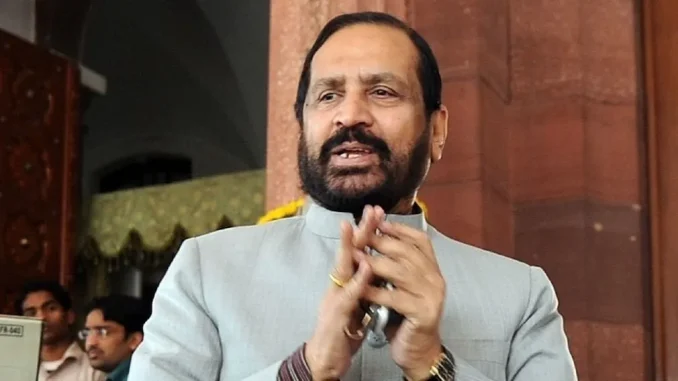
Suresh Kalmadi was an influential Indian politician and sports administrator whose career spanned the military, national politics, and international sports administration. Rising from the Indian Air Force to become a prominent leader within the Indian National Congress, he played a major role in shaping sports governance in India through his long tenure as President of the Indian Olympic Association and the Asian Athletics Association. Best known for his central involvement in the 2010 Commonwealth Games, Kalmadi’s legacy is defined by both significant contributions to India’s sporting scene and the controversies that later surrounded his career. His journey reflects a complex blend of ambition, organizational impact, and public criticism, making him one of the most discussed figures in modern Indian sports administration.
Suresh Kalmadi passed away on 6 January 2026 at the age of 81 in Pune, Maharashtra, following a prolonged illness. His death was widely reported across major news outlets, which noted his multifaceted contributions to Indian politics and sports administration, as well as the complex controversies that accompanied his career. Leaders from political and sporting communities expressed condolences, and tributes highlighted his decades of public service and influence.
Suresh Kalmadi Profile Summary
| Field | Details |
|---|---|
| Full Name | Suresh Kalmadi |
| Born | 1 May 1944, Madras (now Chennai), British India |
| Died | 6 January 2026, Pune, Maharashtra, India |
| Age at Death | 81 |
| Cause of Death | Prolonged illness (specific details not publicly disclosed) |
| Nationality | Indian |
| Occupations | Politician, Sports Administrator, Former IAF Squadron Leader |
| Political Party | Indian National Congress |
| Key Political Roles | MP (Rajya Sabha & Lok Sabha), Minister of State for Railways |
| Major Sports Roles | President, Indian Olympic Association (1996–2011); President, Asian Athletics Association (2000–2013) |
| Known For | Leading the 2010 Commonwealth Games Organising Committee |
| Controversy | 2010 Commonwealth Games corruption allegations and legal cases |
| Military Background | Squadron Leader, Indian Air Force; served in 1965 & 1971 wars |
| Family | Married to Meera Kalmadi; 1 son & 2 daughters |
| Notable Legacy | Expansion of Indian athletics & sports administration; controversial CWG chapter |
Suresh Kalmadi Early Life & Education
Suresh Kalmadi was born on 1 May 1944 in Madras (now Chennai), in the former Madras Province of British India, into a family with roots in Mangalore, Karnataka.
He grew up largely in Pune, Maharashtra, where he completed his secondary schooling at St. Vincent’s High School before going on to pursue undergraduate studies at the prestigious Fergusson College in Pune one of the city’s oldest institutions of higher learning.
In 1960, Kalmadi entered the National Defence Academy (NDA) in Khadakwasla, Pune, marking the beginning of his military career. Following his NDA training, he received advanced aviation instruction at the Air Force Flying Colleges in Jodhpur and Allahabad.
After completing his training, Kalmadi was commissioned as a pilot in the Indian Air Force, where he served with distinction from 1964 to 1972 and later took on a role as an instructor before retiring as a squadron leader.
Suresh Kalmadi Military Career
Suresh Kalmadi began his professional journey with the Indian Air Force (IAF) after completing his schooling and college education. He joined the National Defence Academy (NDA) in 1960, laying the foundation for his career in military aviation. Following his time at the NDA, he underwent further flight training at the Air Force Flying College before being commissioned as a pilot in the Indian Air Force in 1964.
During his service with the IAF, Kalmadi was part of India’s air operations during a period that included both the 1965 and 1971 Indo-Pakistani wars, gaining experience as a military aviator in challenging times for the nation. His role as a pilot in these conflicts contributed to his early popularity before entering politics.
After active flying duty, he transitioned to an instructional role, serving as an instructor with the Air Force Training Team at the NDA from 1972 to 1974. In this capacity, he was responsible for training future IAF officers, passing on his operational knowledge and expertise.
Kalmadi retired from the Indian Air Force with the rank of Squadron Leader, leaving the military in the early 1970s to pursue a career in public life and politics. His military background as a pilot and instructor provided him with leadership experience that he later drew on throughout his political and administrative career.
Suresh Kalmadi Political Career
Suresh Kalmadi’s political career began in the late 1970s when he entered active politics through the Indian Youth Congress, the youth wing of the Indian National Congress. He quickly rose through the ranks, becoming President of the Pune Youth Congress in 1977 and later President of the Maharashtra Youth Congress. His early political visibility was boosted by well-known local activism, which helped establish him as an emerging leader within the party.
Kalmadi’s first significant national role came in 1982 when he was elected to the Rajya Sabha, the upper house of the Indian Parliament. He went on to serve multiple terms in the Rajya Sabha (1982–1988, 1988–1994, 1994–1996, and 1998–2004), representing Maharashtra and solidifying his presence in national politics.
In 1996, he transitioned to electoral politics in the Lok Sabha, the lower house of Parliament, winning the Pune seat. Kalmadi represented Pune as a Member of Parliament in 1996–1998, 2004–2009, and 2009–2014, becoming a familiar figure in both state and national political circles.
During the P. V. Narasimha Rao government, he served as Minister of State for Railways from 1995 to 1996, gaining experience in executive governance. Throughout his political life, Kalmadi was regarded as a key Congress organizer in Pune and Maharashtra, known for his strong local networks and influence in civic and social projects. However, later in his career, his political reputation was affected by controversies related to his administrative roles, particularly around the 2010 Commonwealth Games, which sparked significant public and legal criticism.
Suresh Kalmadi Sports Administration
Suresh Kalmadi was one of the most influential and long-serving sports administrators in India’s modern history, holding multiple senior leadership roles in national, continental, and international sporting bodies. He served as President of the Indian Olympic Association (IOA) from 1996 until 2011, overseeing Indian Olympic sport during a period of expanding international participation and organizational change.
In addition to his role at the IOA, Kalmadi was a key figure in athletics governance across Asia. He was elected President of the Asian Athletics Association (AAA) in 2000, a position he held until 2013, and was later named Life President of the association. During his leadership, he helped develop major continental competitions and platforms for athletes, such as the Asian Indoor Championships, the Asian Grand Prix Series, and the Asian All-Star Meet, boosting competitive opportunities and visibility for Asian track and field athletes.
Kalmadi also served on the World Athletics Council from 2001 to 2013, reflecting his reach in global track and field administration and his status among international sports governance circles. Under his stewardship, athletics and multi-sport events saw expanded engagement and infrastructure development, with initiatives aimed at enhancing standards and exposure for athletes from the continent.
However, his tenure in sports administration was also marked by controversy, most notably linked to the 2010 Commonwealth Games in New Delhi, where he served as Chairman of the Organising Committee. The event, while historic for India, became synonymous with allegations of financial irregularities and mismanagement, which significantly affected his reputation and ultimately prompted his exit from the IOA presidency in 2011.
Suresh Kalmadi 2010 Commonwealth Games & Controversies
Suresh Kalmadi’s most prominent and controversial chapter came with his role as Chairman of the Organising Committee for the 2010 Commonwealth Games (CWG) in New Delhi, an event that was historically significant for India but also became one of the country’s most high-profile corruption scandals. As the face of the Games, Kalmadi was responsible for planning and execution, and while the event ultimately took place successfully, its organisation was marred by widespread allegations of irregularities, inflated costs, and administrative failures that drew intense public and media scrutiny.
Almost immediately after the Games, investigative agencies began probing financial and procedural issues linked to contracts awarded during the preparation phase. In April 2011, the Central Bureau of Investigation (CBI) charged Kalmadi and multiple associates with criminal conspiracy, cheating, and corruption, alleging that contracts including for timing and scoring systems were awarded at inflated costs that disproportionately burdened the public treasury. Kalmadi was arrested and spent approximately nine months in Tihar Jail before being granted bail by the Delhi High Court in early 2012.
The legal aftermath of the scandal extended for years. Several cases were filed by investigative agencies, and at times new allegations emerged. However, many of these cases did not lead to convictions: for example, in **April 2025 a Delhi court accepted a closure report from the Enforcement Directorate (ED) in a money-laundering case linked to the CWG, effectively ending that particular legal front against Kalmadi and others. This acceptance of the closure report came nearly 15 years after the original controversy erupted.
Public and political reactions to the CWG controversy were intense. Kalmadi was suspended from the Indian National Congress following his arrest in 2011, and his standing in both politics and sports administration suffered considerably thereafter. Though his supporters and some local leaders later called for his rehabilitation after legal relief, the scandal significantly diminished his influence and became inseparable from his legacy.
Suresh Kalmadi Personal and Family Life
Suresh Kalmadi’s personal life was marked by a deep commitment to family alongside his lengthy public career. He married Meera Kalmadi on 23 April 1971, and together they built a household grounded in both tradition and Office engagements. Their partnership lasted over five decades, with Meera frequently accompanying him at political and social events throughout his career.
The couple had three children one son and two daughters who grew up during the height of Kalmadi’s political ascent. While Kalmadi made headlines on the national stage, family milestones such as his children’s weddings were also covered by the press, reflecting the family’s social prominence in Pune and beyond. His son Sumeer Kalmadi’s wedding was noted as a significant social event in Pune in 2004, and his daughter Payal’s marriage to industrialist Aditya Bhartia drew media attention with many public figures in attendance.
As a father, Kalmadi maintained a balance between his demanding public life and family responsibilities, often being seen at important cultural and civic occasions with his loved ones. His children, while not very public in politics, were part of the broader social circles that intersected with his professional world. In some cases, members of the extended family were involved in business and social activities linked to his work.
At the time of his passing in January 2026, Kalmadi was remembered not only for his decades of public service but also as a husband, father, and grandfather. Tributes in the media highlighted the presence of his family at his final rites in Pune, a testament to the enduring personal bonds that underpinned his long and often controversial career.
Suresh Kalmadi Death & Legacy
Suresh Kalmadi passed away on 6 January 2026 in Pune, Maharashtra, at the age of 81 after a prolonged illness, drawing widespread expressions of condolence from political leaders, sports administrators, and public figures across India. He was undergoing treatment in Pune when he died, marking the end of a long and eventful chapter of an Indian Politician/Sportsman.
His funeral and last rites were held the same day at the Vaikunth Crematorium in Navi Peth, Pune, where family members, friends, and supporters paid their respects. Tributes poured in from across the political spectrum, with many acknowledging his decades of service in politics and sports administration, as well as his influence in shaping Pune’s civic and cultural landscape.
Kalmadi’s legacy is deeply complex and multifaceted. On one hand, he is remembered as a long-serving leader in Indian sports governance, having played a pivotal role in promoting athletics and international competitions efforts acknowledged by peers in the Indian sports community. His leadership roles in the Indian Olympic Association and Asian Athletics Association contributed to expanded opportunities for athletes and helped raise India’s profile in global sport.
On the other hand, his career was overshadowed by controversy, most notably the reported allegations of corruption and mismanagement related to the 2010 Commonwealth Games in New Delhi, which tarnished his reputation and led to lengthy legal battles. This duality has shaped how many observers view his contributions: as those of a visionary administrator whose achievements were later clouded by scandal and dispute.
Suresh Kalmadi Age and Date of Birth
Suresh Kalmadi was born on 1 May 1944 in Madras (now Chennai), in the former Madras Province of British India.
His age at the time of death is 81 years, passing away on 6 January 2026 in Pune, Maharashtra, India, after a prolonged illness.
Kalmadi’s lifespan from 1 May 1944 to 6 January 2026 spanned pivotal periods in India’s post-independence political and sporting history, during which he emerged as a well-known figure in both arenas.
Conclusion
Suresh Kalmadi’s life reflects the arc of a figure who occupied a singular space at the intersection of politics, military service, and sports administration in India. From his early years as an Air Force officer to his decades in electoral politics and his influential role in shaping India’s sporting institutions, he left a deep imprint across multiple spheres of his career. His contributions to athletics and international sporting engagement helped elevate India’s presence on the global stage, while his role in the 2010 Commonwealth Games positioned him at the center of one of the country’s most discussed sporting events.
Yet, his career will also be remembered for the controversies that surrounded the Commonwealth Games, which complicated his public legacy and reshaped how he was perceived in later years. Following his passing on January 2026, reflections on his life have acknowledged both the scale of his achievements and the debates that accompanied his tenure in public affairs. Taken together, Kalmadi’s story stands as a multifaceted chapter in modern Indian history marked by ambition, influence, accomplishment, and criticism in equal measure.
Frequently Asked Questions About Suresh Kalmadi
1. Who was Suresh Kalmadi?
Suresh Kalmadi was an Indian politician, senior sports administrator, and former Union Minister of State for Railways. He served multiple terms as a Member of Parliament from Pune and was long-time President of the Indian Olympic Association and the Asian Athletics Association. He became widely known for his role in organising the 2010 Commonwealth Games in Delhi and the subsequent controversy around them.
2. What is the current news about Suresh Kalmadi?
Recent news reports confirm that Suresh Kalmadi passed away on 6 January 2026 at age 81 after a prolonged illness in Pune. Tributes have come from leaders across political parties, and his contributions to politics, sports administration, and Pune’s civic life have been widely noted.
3. What do we know about Suresh Kalmadi’s family?
Kalmadi was married to Meera Kalmadi, and the couple had one son and two daughters. At his death, he was survived by his wife, son, daughter-in-law, his two married daughters, sons-in-law, and grandchildren.
What illness did Suresh Kalmadi have?
Suresh Kalmadi died after a prolonged illness, according to official reports, but specific medical details beyond “a prolonged illness” have not been publicly disclosed.
5. When and where was Suresh Kalmadi’s funeral?
His funeral was held on 6 January 2026 at the Vaikunth Crematorium in Navi Peth, Pune. Prior to cremation, his mortal remains were kept at his Pune residence for public homage.
6. Who are Suresh Kalmadi’s daughters?
Suresh Kalmadi had two daughters.
7. What was Suresh Kalmadi’s cause of death?
Suresh Kalmadi died from a prolonged illness while undergoing treatment at Deenanath Mangeshkar Hospital in Pune.
8. Who was Suresh Kalmadi’s wife?
Answer: Suresh Kalmadi’s wife was Meera Kalmadi. The couple were married and had three children together.
Read more:
- Linda Sibiya Biography: Life, Wife, Children and Legacy
- Romeo V. Poquiz Biography: Life, Career, Age and Legacy
Be the first to comment