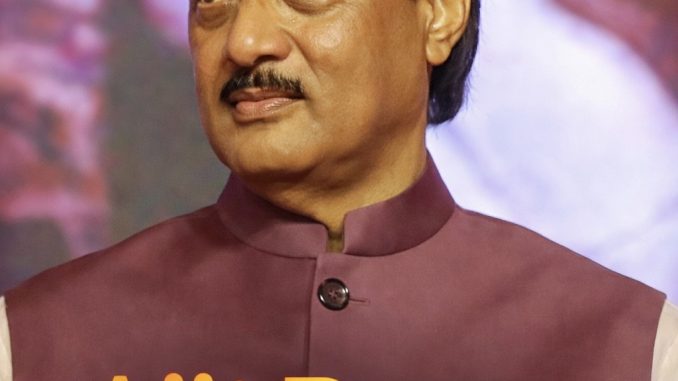
Ajit Pawar stands as one of the most influential political figures in the modern history of Maharashtra. Rising from the cooperative heartland of Baramati to occupy the state’s second-highest executive office multiple times, he shaped Maharashtra’s financial, irrigation, and developmental policies over a public career that spanned more than four decades. As nephew to veteran leader Sharad Pawar, he inherited a powerful political legacy, yet forged a distinct identity marked by administrative focus, electoral resilience, and an intimate understanding of grassroots governance. His journey reflects the complex dynamics of regional politics in India—combining family lineage, institutional leadership, and strategic realignments that redefined the trajectory of the Nationalist Congress Party in the 21st century.
Ajit Pawar Early Life
Ajit Anantrao Pawar was born on 22 July 1959 in Deolali Pravara, a village located in Rahuri taluka of Ahmednagar district, Maharashtra. He grew up in a family deeply rooted in the agrarian and cooperative culture of rural Maharashtra, an environment that would later shape his political instincts and administrative priorities. His father, Anantrao Govindrao Pawar, passed away while Ajit was still young, placing early responsibility on him and reinforcing the value of discipline and resilience within the household. His mother, Ashatai Pawar, played a central role in managing family affairs and ensuring stability.
Ajit Pawar spent his formative years in and around Baramati, a region that would eventually become the nucleus of his political career. The social landscape of Baramati during his youth was defined by agriculture, cooperative institutions, and the rise of new political leadership in Maharashtra. Growing up in close proximity to his uncle, Sharad Pawar, he witnessed early the interplay between grassroots mobilization and state-level administration. Exposure to the challenges faced by farmers, sugar cooperatives, and rural communities gave him a grounded understanding of Maharashtra’s socio-economic realities and laid the foundation for his later work in public life.
Ajit Pawar Education
Ajit Pawar’s education was rooted in Maharashtra’s local institutions, reflecting the environment in which he developed both socially and intellectually. He received his early schooling at Balvikas Mandir in Baramati, where he completed his foundational studies and took part in school-level activities that emphasized discipline and community engagement.
For his secondary education, he continued in Baramati and completed his Secondary School Certificate examinations, marking the first milestone in his academic journey. After school, he pursued college studies in Mumbai at Wilson College, where he encountered broader social, cultural, and academic settings. He later continued his higher education at Shahaji College in Kolhapur, completing his college-level studies before turning his focus toward social and public responsibilities.
The early passing of his father placed added responsibility on him at a young age, influencing his transition from academic pursuits into social and political engagement much earlier than originally anticipated.
Ajit Pawar Personal Life and Family
Ajit Pawar belonged to a politically prominent family embedded in Maharashtra’s social, cooperative, and electoral networks. Born to Anantrao Govindrao Pawar and Ashatai Pawar, he grew up within a household that valued community engagement, organizational leadership, and social responsibility. In 1985, Ajit Pawar married Sunetra Pawar, who became an important presence in both his personal and public life. The couple had two sons, Jay Pawar and Parth Pawar, who pursued paths connected to business, public affairs, and regional organizational roles.
Ajit Pawar was also part of a wider political lineage. His uncle, Sharad Pawar, served as Chief Minister of Maharashtra and Union Minister, becoming one of India’s most recognized political figures. Other prominent relatives include Supriya Sule, a Member of Parliament, and Rohit Pawar, a rising public figure in Maharashtra’s political arena.
Despite his demanding career, Ajit Pawar maintained a disciplined personal routine anchored in punctuality and work ethic. He was known for keeping his family life relatively private while remaining deeply connected to social and cooperative networks that had shaped his upbringing. Baramati remained both his political stronghold and his family’s social home base.
Ajit Pawar Political Career
Ajit Pawar built one of the most enduring careers in Maharashtra’s political landscape, marked by sustained electoral success, long administrative experience, and a central role in state-level governance.
His political journey began in the early 1980s through the cooperative sector, a powerful socio-economic network in rural Maharashtra. He entered public life through the management of a cooperative sugar factory and later became Chairman of the Pune District Central Cooperative Bank. These institutions connected him with farmers, workers, and cooperative bodies, strengthening his grassroots support and administrative influence.
Ajit Pawar formally entered electoral politics as the representative of Baramati in the Maharashtra Legislative Assembly, a constituency that he successfully defended multiple times. Across his long political career, he held several major portfolios, including Finance, Planning, Water Resources, Irrigation, and Energy. His command over Maharashtra’s budgetary and planning apparatus made him one of the most influential figures in the state cabinet for many years.
A defining feature of his career was his repeated tenure as Deputy Chief Minister of Maharashtra. He played a central role in cabinet formation, coalition arrangements, and fiscal administration across successive governments. His leadership within the Nationalist Congress Party was equally significant. His strategic influence shaped electoral alliances, party organization, and in later years, factional realignments that redefined the party’s identity and positioning within the state’s political narrative.
Through his long and active public life, Ajit Pawar established a reputation as a results-oriented administrator, a skilled coalition negotiator, and a central architect of Maharashtra’s developmental planning.
Ajit Pawar Death and Tributes
On 28 January 2026, Ajit Pawar died in a tragic plane crash near Baramati while traveling to campaign for local elections. The aircraft crashed during a landing attempt, killing Pawar and others on board. He was 66 years old at the time of his passing.
His death sent shockwaves through Maharashtra and the nation. The Maharashtra government declared a period of official mourning, and state leaders described the loss as unprecedented. National leaders, including the Prime Minister and President of India, expressed deep sorrow and highlighted his contributions to public life, fiscal administration, and rural development. Political leaders from across party lines, along with members of the public and prominent personalities from the arts and media, paid tribute to his long and impactful career. His final rites were attended by large crowds, reflecting his deep electoral and cooperative roots in Baramati and beyond.
Ajit Pawar Legacy
Ajit Pawar occupies a lasting place in the political history of Maharashtra as one of the most experienced and impactful state leaders of his generation. His legacy is anchored in three interconnected domains: cooperative institutions, state finance and planning, and coalition politics.
Through his sustained work in cooperative sugar factories, district banks, and rural unions, he strengthened institutional frameworks that supported economic and agricultural development. As Finance and Planning Minister, and as Deputy Chief Minister, he shaped state budgets, irrigation and infrastructure programs, and fiscal strategies that impacted a wide range of sectors. His role in political negotiations and party organization redefined coalition dynamics and contributed to major turning points in Maharashtra’s contemporary political history.
For Baramati, his legacy is tangible and immediate: strengthened cooperative enterprises, modern infrastructure, educational institutions, and regionally focused development initiatives. For Maharashtra, his impact continues through the administrative systems he helped shape and the political alignments he influenced.
Ajit Pawar’s legacy stands as a testament to state-level leadership grounded in organizational discipline, financial stewardship, and sustained public engagement.
Conclusion
Ajit Anantrao Pawar’s journey from the cooperative institutions of rural Maharashtra to the upper levels of state governance reflects the scale and complexity of Maharashtra’s political landscape. His life intertwined administrative discipline, electoral continuity, and grassroots engagement across more than four decades of public service. His sudden passing in 2026 marked the end of an era, prompting tributes that acknowledged not only the positions he held but the breadth of social and institutional networks he helped build. His story remains embedded in the political history of Maharashtra and in the memory of the communities he served.
Frequently Asked Questions About Ajit Pawar
1. What positions did Ajit Pawar hold during his political career?
He served multiple terms as Deputy Chief Minister of Maharashtra and held major portfolios including Finance, Planning, Irrigation, Water Resources, and Energy.
2. Which constituency did he represent?
He represented the Baramati constituency in the Maharashtra Legislative Assembly.
3. What was his role in the cooperative movement?
He was deeply involved in cooperative sugar factories, district cooperative banks, and related institutions, strengthening them as engines of rural development.
4. How did Ajit Pawar die?
He died in a plane crash near Baramati on 28 January 2026 while traveling for election-related engagements.
5. What is considered his most enduring legacy?
His most enduring legacy lies in cooperative institutional development, fiscal administration, and long-term influence over Maharashtra’s political and economic planning.
Read more:
- Jose Melencio Nartatez Biography: Life, Rank, Career and Legacy
- James Jimenez Biography: Life, Death, Career and Legacy
Be the first to comment