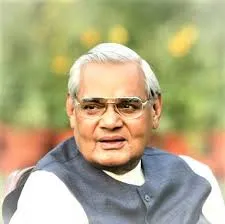
Atal Bihari Vajpayee occupies a unique and respected place in modern Indian history. Remembered as a statesman, poet, parliamentarian, and consensus builder, he was one of the few political leaders admired across party lines. His calm demeanor, refined language, and ability to balance ideology with pragmatism made him a towering figure in Indian democracy.
Vajpayee served as the Prime Minister of India three times and played a crucial role in shaping India’s political, strategic, and infrastructural direction during the late 20th and early 21st centuries. Beyond politics, he was also a celebrated Hindi poet whose writings reflected humanism, nationalism, and deep personal introspection. This biography explores his life journey, achievements, challenges, and enduring legacy in a way that is easy to understand and informative for readers of all backgrounds.
Atal Bihari Vajpayee Profile Summary
| Attribute | Details |
|---|---|
| Full Name | Atal Bihari Vajpayee |
| Date of Birth | December 25, 1924 |
| Place of Birth | Gwalior, Madhya Pradesh, India |
| Date of Death | August 16, 2018 |
| Age at Death | 93 years |
| Nationality | Indian |
| Political Party | Bharatiya Janata Party (BJP) |
| Earlier Association | Bharatiya Jana Sangh |
| Offices Held | Prime Minister of India (3 terms), External Affairs Minister |
| Education | Master’s degree in Political Science |
| Awards | Bharat Ratna (2015) |
| Profession | Politician, Poet, Writer |
Atal Bihari Vajpayee Early Life and Education
Atal Bihari Vajpayee was born on December 25, 1924, in the historic city of Gwalior. He came from a modest family with strong cultural and intellectual values. His father, Krishna Bihari Vajpayee, was a school teacher and a poet, which played a major role in shaping young Atal’s love for language, literature, and disciplined thinking.
From an early age, Vajpayee displayed a keen interest in reading, writing, and public speaking. He was particularly drawn to Hindi literature and poetry, interests that would remain with him throughout his life. His schooling laid a strong foundation in both academics and moral values.
Vajpayee pursued higher education at DAV College, Kanpur, where he earned a Bachelor’s degree followed by a Master’s degree in Political Science. His academic background helped him develop a deep understanding of political theory, governance, and international affairs. During his student years, he became actively involved in debates and discussions, gaining recognition for his clarity of thought and eloquence.
Atal Bihari Vajpayee Political Career
Vajpayee’s political journey began at a young age when he became associated with the Rashtriya Swayamsevak Sangh (RSS). The RSS emphasized discipline, nationalism, and social service, values that strongly influenced his worldview.
He later joined the Bharatiya Jana Sangh, the political wing aligned with the RSS. Vajpayee quickly emerged as one of its most articulate and visible leaders, known for expressing strong views without personal bitterness or aggression.
Atal Bihari Vajpayee entered Parliament in 1957, beginning a long and distinguished parliamentary career. Over the decades, he was elected multiple times to the Lok Sabha and also served in the Rajya Sabha.
He gained widespread respect as a powerful orator. Even political opponents admired his speeches for their logic, restraint, and poetic elegance. During periods when his party was in opposition, Vajpayee became a leading voice holding governments accountable while maintaining parliamentary decorum.
Vajpayee became Prime Minister for the first time in 1996, but his government lasted only 13 days due to lack of majority support.
His second term (1998–1999) marked a turning point. Leading a coalition government, he demonstrated that stable governance was possible even without a single-party majority.
His third and longest term (1999–2004) provided the opportunity to implement long-term policies. During this period, Vajpayee focused on infrastructure development, economic reforms, national security, and diplomatic engagement.
Atal Bihari Vajpayee Major Achievements
Atal Bihari Vajpayee’s tenure as Prime Minister is remembered for several landmark achievements that shaped modern India.
One of the most significant events was the Pokhran-II nuclear tests in 1998, which established India as a declared nuclear power. Despite international pressure and sanctions, Vajpayee maintained that the move was necessary for national security.
In foreign policy, he surprised many by extending a hand of friendship to Pakistan. His Lahore bus journey in 1999 and the signing of the Lahore Declaration symbolized his belief that dialogue was essential even between rivals.
On the development front, Vajpayee launched ambitious infrastructure projects. The Golden Quadrilateral highway project connected major cities and transformed road transport across India. The Pradhan Mantri Gram Sadak Yojana (PMGSY) improved rural connectivity and had a lasting impact on village economies.
Economically, his government continued liberalization, encouraged private participation, and strengthened India’s global economic engagement. These steps contributed to long-term growth and modernization.
Atal Bihari Vajpayee Controversies and Criticism
Like any major political leader, Vajpayee’s career was not without criticism. His first government in 1996 collapsed quickly, highlighting coalition challenges.
The nuclear tests drew international sanctions and criticism, although they later gained broader acceptance domestically. Some economic reforms, including privatization, were opposed by trade unions and political rivals who feared job losses.
During his tenure, India also faced security challenges such as the Kargil conflict, which tested the government’s military and diplomatic resolve. While his leadership during the crisis was widely praised, debates continue over intelligence and preparedness issues.
Atal Bihari Vajpayee Personal Life
Atal Bihari Vajpayee led a simple and disciplined personal life. He never married and had no biological children. Despite this, he maintained close family-like relationships with several individuals, most notably Namita Kaul, whom he treated as an adopted daughter, though there was no formal adoption.
He was known for his humility, punctuality, and respect for differing opinions. Vajpayee avoided personal attacks and believed in dignified political conduct.
In his later years, he suffered from serious health issues and gradually withdrew from public life after 2009. His declining health was marked by dignity and privacy, in keeping with his lifelong character.
Atal Bihari Vajpayee Poetry Contributions
Beyond politics, Vajpayee was a respected Hindi poet. His poetry explored themes such as patriotism, peace, democracy, love, and the struggles of public life.
Some of his well-known poetry collections include Meri Ekyavan Kavitayein, Sankalp Kaal, and Amar Aag Hai. His poems are often included in school curricula and literary discussions.
What set his poetry apart was its emotional depth combined with clarity of expression. Even readers unfamiliar with politics found resonance in his words.
Recent News About Atal Bihari Vajpayee
Although Atal Bihari Vajpayee passed away in 2018, he remains actively remembered in public life. His birth anniversary on December 25 is observed as Good Governance Day across India.
In recent years, memorials, statues, institutions, and welfare schemes have been named in his honor. Political leaders frequently reference his leadership style as a model of inclusive governance and respectful debate.
Today India celebrates him as one of the leaders that advocated for good governance and his legacy lives forever.
Frequently Asked Questions (FAQ) About Atal Bihari Vajpayee
When did Atal Bihari Vajpayee become Prime Minister?
He served as Prime Minister three times: 1996, 1998–1999, and 1999–2004.
Did he have a wife or children?
No, he never married and had no biological children.
What was his educational qualification?
He held a Master’s degree in Political Science.
Why is he considered a great leader?
For his balanced leadership, infrastructure vision, diplomacy, and parliamentary values.
Why is December 25 important?
It is his birth anniversary and is observed as Good Governance Day.
Conclusion
Atal Bihari Vajpayee’s life was a rare blend of power and humility, ideology and openness, politics and poetry. He demonstrated that leadership does not require harshness and that strength can coexist with compassion.
His contributions to India’s democracy, infrastructure, foreign policy, and political culture continue to influence the nation. Decades after his rise to prominence and years after his passing, Vajpayee remains a symbol of principled leadership and thoughtful governance.
His legacy endures not only in roads, policies, and institutions, but also in the ideals of respectful dialogue and democratic maturity that he consistently upheld.
Read more:
- Nawaz Sharif Biography: Life, Politics, Exile And Achievements
- Tarique Rahman Biography: Life, Politics, Exile and Recent News
Be the first to comment