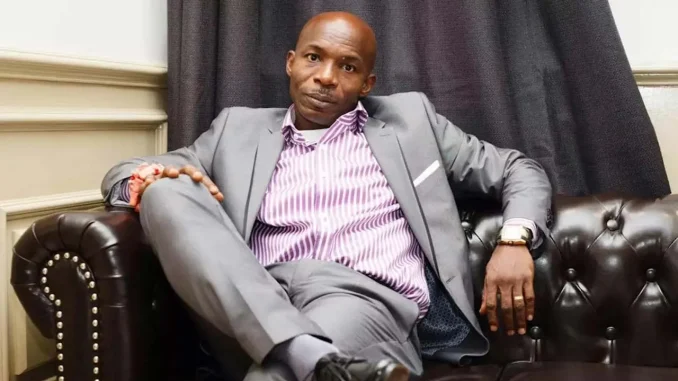
Don Pedro Obaseki is a filmmaker, theatre practitioner, academic, broadcaster, media executive, cultural advocate, and political participant, Obaseki’s life reflects the complexity of operating at the intersection of art, ideas, power, and tradition in Nigeria. Over several decades, he has moved fluidly between classrooms, stages, studios, boardrooms, and public debate, shaping conversations about culture, identity, media, and governance.
Known for his intellectual boldness and unapologetic engagement with difficult questions, Obaseki has never confined himself to a single professional lane. His career spans university teaching, theatre production, early Nollywood filmmaking, broadcast leadership, cultural advocacy, and direct political involvement. This breadth has earned him both admiration and controversy, positioning him as a figure whose influence extends beyond creative output into the realm of public thought and civic discourse.
On 28 December 2025, Obaseki’s name entered headlines following a disturbing incident in Benin City, where he was assaulted and publicly humiliated by a mob accusing him of disloyalty to traditional authority. The incident widely condemned by legal practitioners, academics, and human-rights advocates cast a harsh spotlight on long-standing tensions between culture, power, and the rule of law.
Don Pedro Obaseki Profile Summary
| Field | Details |
|---|---|
| Full Name | Don Pedro Obaseki |
| Year of Birth | 1967 |
| Place of Birth | Benin City, Edo State, Nigeria |
| Parents | Samson Agbonifo-Obaseki (father); Sarah Obaseki (mother) |
| State of Origin | Edo State |
| Nationality | Nigerian |
| Occupation | Filmmaker, Theatre Practitioner, Academic, Broadcaster, Media Executive, Public Commentator |
| Age | 58 yrs |
| Education (Secondary) | Unity School, Agbarho |
| Education (Tertiary) | Theatre Arts, University of Benin |
| Postgraduate Training | Advanced and doctoral-level studies reported (including University of Ibadan) |
| Academic Career | Former Lecturer in Theatre Arts, University of Benin |
| Film & Theatre Work | Theatre-for-development productions; Igodo (1999) |
| Broadcasting Career | Senior roles in Nigerian broadcasting; media consultancy; broadcast entrepreneurship |
| Political Involvement | Governorship aspirant, Edo State (2016) |
| Family Relations | Cousin of Godwin Obaseki (former Governor of Edo State) |
| Marital Status | Married |
| Spouse | Uchenna Obaseki |
| Children | Yes (kept private) |
| Personal Interests | Football, fitness, reading, cultural history |
| Public Role | Cultural advocate, public intellectual, media commentator |
| Notable Incident | Assault and public humiliation in Benin City on 28 December 2025 |
| https://www.instagram.com/obaseki2016/ |
Don Pedro Obaseki Early Life and Background
Don Pedro Obaseki was born to Samson Agbonifo-Obaseki and Sarah Obaseki, parents whose emphasis on education, discipline, and social awareness played an important role in shaping his early development. Growing up within the Obaseki family environment, he was exposed to values that balanced culture with openness to broader societal experiences.
During his childhood, Obaseki lived not only in Benin City but also in several parts of Delta State, including Warri, Ughelli, and Agbor. His formative years were spent across multiple cultural and social settings rather than within a single, fixed environment.
Exposure to different ethnic groups, dialects, customs, and social realities at a young age significantly broadened his worldview. These experiences helped cultivate an early sensitivity to diversity, power dynamics, and communal identity elements that would later become central to his work as a theatre practitioner, filmmaker, academic, and public commentator. The contrasts he observed between urban and semi-urban communities, as well as between different cultural traditions, contributed to the depth and range that would characterize his intellectual and creative output later in life.
Don Pedro Obaseki Education and Academic Training
Obaseki completed his primary and secondary education in Nigeria, attending different schools in Benin City and Delta State. Moving between schools at a young age helped him become adaptable and curious, qualities that later shaped his career. He is reported to have attended Unity School, Agbarho, for his secondary education, where he showed early interest in reading, debating, drama, and sports.
Obaseki proceeded to the University of Benin, where he studied Theatre Arts. His undergraduate years marked a decisive turn toward performance, cultural studies, and dramatic expression. He immersed himself in stage productions, dramatic theory, and intellectual debates, quickly emerging as a confident and articulate presence within the theatre community.
Following his undergraduate education, Obaseki pursued postgraduate and advanced studies at the University of Ibadan and other institutions. He is widely described as having attained doctoral-level qualifications. He also reportedly completed the National Youth Service Corps (NYSC) program in Kaduna State, an experience that further broadened his national outlook and reinforced his engagement with Nigeria’s diverse cultural landscape.
Don Pedro Obaseki Academic Career and Teaching
Obaseki’s academic career began soon after his advanced training, when he joined the University of Benin as a lecturer in Theatre Arts. His appointment at a relatively young age reflected both his academic preparedness and his growing reputation as a practitioner-scholar. In the classroom, he taught courses in theatre practice, performance theory, dramatic literature, and cultural studies.
Former students frequently describe Obaseki’s teaching style as intellectually demanding, disciplined, and grounded in real-world relevance. He approached theatre not merely as an artistic pursuit but as a tool for social interrogation, cultural preservation, and civic responsibility. His insistence on originality, critical thinking, and ethical engagement left a lasting impression on students across disciplines.
Beyond lectures, Obaseki remained actively involved in stage productions, workshops, and performance research. This integration of teaching and practice reinforced his identity as a practitioner-academic, rather than a purely theoretical scholar. His years in academia laid the intellectual foundation for his later work in film, broadcasting, and public commentary.
Don Pedro Obaseki Creative Career in Theatre and Film
Obaseki’s transition from academia into creative production was both natural and deliberate. His theatre work focused on storytelling rooted in history, morality, power, and communal identity. Often aligned with theatre-for-development, his productions sought to engage audiences intellectually while remaining accessible and culturally resonant.
As Nigeria’s video film industry expanded in the 1990s, Obaseki became involved in early Nollywood-era productions. He is most prominently associated with the epic film Igodo (1999), a project that remains frequently cited in discussions of Nigeria’s formative video-film period. His role in the film variously described across sources as director or producer placed him among practitioners shaping the industry’s early narrative and aesthetic direction.
Across theatre and film, Obaseki’s creative work consistently emphasized historical consciousness and social critique. He drew heavily from Benin history, Nigerian folklore, and contemporary political realities, positioning creative expression as a bridge between tradition and modernity. This artistic sensibility reinforced his reputation as a thinker as much as a creator.
Don Pedro Obaseki Broadcasting and Media Leadership
Building on his creative experience, Obaseki moved into broadcasting and media leadership, where he applied performance theory and cultural analysis to television programming and media strategy. His work in broadcasting reflected a desire to influence not just content, but the systems through which stories reach audiences.
He is widely reported to have held senior roles associated with DAAR Communications Plc, the parent company of Africa Independent Television (AIT) and RayPower FM. In these roles, he was involved in programming strategy, content oversight, and media consultancy. He later became associated with ACC Broadcast Multimedia Ltd, where he is described as a leading executive figure.
Obaseki’s broadcast philosophy emphasized cultural relevance, intellectual depth, and social responsibility. He advocated for indigenous storytelling and critiqued media sensationalism, positioning himself as a media intellectual rather than a conventional executive. This phase expanded his national influence and visibility.
Don Pedro Obaseki Public Commentary and Cultural Advocacy
Over time, Obaseki emerged as a prominent public commentator, engaging issues of culture, governance, media ethics, and national identity. Through interviews, lectures, and public statements, he argued that intellectuals and creatives have a responsibility to participate actively in shaping public understanding.
A central theme of his advocacy has been Benin cultural heritage. He consistently emphasized the importance of historical accuracy, institutional integrity, and cultural dignity. His commentary often sought to contextualize contemporary disputes within deeper historical frameworks, though this approach sometimes placed him at odds with prevailing political or cultural sentiments.
While admired by supporters for his intellectual courage, Obaseki’s outspoken style also attracted criticism. Nonetheless, his sustained engagement with public discourse reinforced his role as a cultural thinker unwilling to retreat into silence.
Don Pedro Obaseki Political Involvement and Public Affairs
Obaseki’s entry into formal politics occurred in the lead-up to the 2016 Edo State governorship election, when he declared his intention to contest. His political messaging emphasized reform, education, cultural identity, and institutional accountability. Though he did not secure the party ticket, his candidacy signaled a willingness to test ideas within the political arena.
His political profile was further shaped by his familial relationship with Godwin Obaseki, though both maintained distinct public identities. Over time, Don Pedro Obaseki remained vocal on governance and cultural issues, even after stepping back from active electoral politics.
This period cemented his image as a politically conscious intellectual neither detached from power nor fully absorbed by it.
Don Pedro Obaseki Personal Life
He is married to Uchenna Obaseki, a broadcaster, writer, and theatre practitioner, and they are reported to have children. He has generally kept his family out of sustained public attention.
He is known for his commitment to physical fitness, regularly engaging in football and exercise an aspect of his lifestyle that became widely noted following the events of 2025. Intellectually, he is described as an avid reader with interests spanning history, philosophy, politics, and culture.
Those close to him often describe him as principled, outspoken, and deeply committed to ideas of dignity and institutional order.
Don Pedro Obaseki Controversies and Major Public Incidents
Throughout his career, Obaseki’s forthright engagement with sensitive issues attracted controversy. However, the most significant incident occurred in December 2025, when he was assaulted and publicly humiliated in Benin City.
According to widely reported accounts, Obaseki was ambushed during routine exercise, stripped to his boxers, forced to kneel and crawl, and dragged to the palace of the Oba of Benin by a group accusing him of being an “Oghionoba.” Viral footage triggered national outrage and condemnation from legal and academic communities.
The incident raised serious questions about human rights, mob justice, and the boundaries of cultural authority, becoming a defining moment in his public life.
Don Pedro Obaseki Awards, Honors, and Recognition
Obaseki has received various forms of recognition for his contributions to theatre, film, broadcasting, and cultural discourse. While not all honors are formally catalogued, his standing as a veteran figure in Nigerian arts and media is well acknowledged.
Former students and colleagues frequently cite his influence, reinforcing his legacy as an educator and mentor whose impact extends beyond awards.
Conclusion
As of the mid-2020s, Obaseki remains a significant voice in Nigeria’s cultural and intellectual landscape. The events of December 2025 have intensified public engagement with his story, reframing his life within broader debates about dignity, authority, and the rule of law.
Ultimately, Don Pedro Obaseki’s biography is not merely a record of achievements, but a reflection of Nigeria’s ongoing struggle to reconcile tradition, modernity, and freedom of thought. His story remains unfinished, continuing to invite reflection, debate, and historical reckoning.
Here are both parts you asked for, written clearly and simply.
Frequently Asked Questions (FAQ) About Don Pedro Obaseki
1. Who is Don Pedro Obaseki?
Don Pedro Obaseki is a Nigerian filmmaker, theatre practitioner, academic, broadcaster, and public commentator. He is known for his work in Nollywood, theatre education, and media leadership.
2. Where is Don Pedro Obaseki from?
He is from Benin City, Edo State, Nigeria.
3. Who are Don Pedro Obaseki’s parents?
His parents are Samson Agbonifo-Obaseki and Sarah Obaseki.
4. When was Don Pedro Obaseki born?
He was born in 1967. Public sources give different exact dates, but the year is widely agreed upon.
5. Where did Don Pedro Obaseki grow up?
He grew up in Benin City and also lived in parts of Delta State, including Warri, Ughelli, and Agbor.
6. Where did he go to school?
He completed his primary and secondary education in Nigeria. He is reported to have attended Unity School, Agbarho, for secondary school and studied Theatre Arts at the University of Benin.
7. Is Don Pedro Obaseki a university lecturer?
Yes. He served as a lecturer in Theatre Arts at the University of Benin, where he taught and mentored students.
8. What is Don Pedro Obaseki known for in film?
He is best known for his involvement in the epic Nollywood film Igodo (1999) and for his role in early Nigerian video film development.
9. Has Don Pedro Obaseki worked in broadcasting?
Yes. He has held senior roles in Nigerian broadcasting and media organizations and has worked as a media consultant and executive.
10. Did Don Pedro Obaseki enter politics?
Yes. He contested as a governorship aspirant in Edo State in 2016, though he did not secure the party ticket.
11. Is Don Pedro Obaseki related to Godwin Obaseki?
Yes. He is a cousin of Godwin Obaseki, the former Governor of Edo State.
12. Is Don Pedro Obaseki married?
Yes. He is married to Uchenna Obaseki, who is also involved in media and creative work.
13. What happened to Don Pedro Obaseki in December 2025?
He was reportedly assaulted and publicly humiliated by a group in Benin City who accused him of being an enemy of the Oba of Benin. The incident sparked widespread condemnation and calls for investigation.
14. Why is Don Pedro Obaseki considered controversial?
He is known for speaking openly on cultural, political, and institutional issues, which has sometimes brought criticism and public disputes.
15. Is Don Pedro Obaseki still active today?
Yes. He remains active as a cultural commentator, media intellectual, and public figure.
Read more:
Be the first to comment