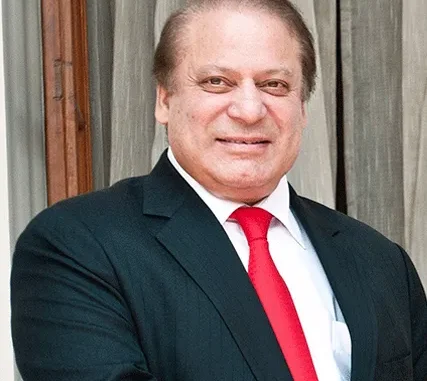
Nawaz Sharif is one of the most influential, long-serving, and controversial political figures in the history of Pakistan. Over more than four decades, he has shaped national politics through repeated rises to power, dramatic removals from office, legal battles, and political comebacks. Serving as Prime Minister of Pakistan three times, Nawaz Sharif has left a deep imprint on the country’s economy, infrastructure, civil-military relations, and party politics.
To his supporters, he is a leader who prioritized development, economic growth, and civilian authority. To critics, he represents elite politics, dynastic power, and unresolved questions about accountability. Regardless of viewpoint, his political journey reflects Pakistan’s complex struggle between democracy, institutions, and power.
This biography presents a clear, balanced, and easy-to-understand account of Nawaz Sharif’s life from his early years and rise in politics to his achievements, controversies, personal life, and current role in Pakistan’s political landscape.
Nawaz Sharif Profile Summary
| Category | Details |
|---|---|
| Full Name | Mian Muhammad Nawaz Sharif |
| Date of Birth | 25 December 1949 |
| Age (as of Dec 25, 2025) | 76 years |
| Place of Birth | Lahore, Punjab, Pakistan |
| Nationality | Pakistani |
| Profession | Politician, Businessman |
| Political Party | Pakistan Muslim League (Nawaz) – PML-N |
| Party Position | President, PML-N |
| Terms as Prime Minister | Three terms (1990–1993, 1997–1999, 2013–2017) |
| Total Time as PM | Longest-serving Prime Minister in Pakistan’s history |
| Current Role | Senior political leader, Member of National Assembly |
| Education | Arts/Business studies; LL.B. (University of the Punjab) |
| Father | Muhammad Sharif (Industrialist, founder of Ittefaq Group) |
| Spouse | Begum Kulsoom Nawaz (late) |
| Children | Maryam Nawaz, Hassan Nawaz, Hussain Nawaz, Asma Nawaz |
| Known For | Infrastructure development, economic policies, civilian supremacy |
| Years in Exile | 1999–2007, 2019–2023 |
| Return to Politics | October 2023 |
| https://www.facebook.com/MuhammadNawazSharifMNS/ |
Nawaz Sharif Early Life and Education
Nawaz Sharif was born into a well-known industrial family in Lahore. His family originally migrated from Kashmir to Punjab and later established itself as a prominent business household. His father, Muhammad Sharif, founded the Ittefaq Group, a major industrial enterprise focused on steel and manufacturing. Growing up in this environment gave Nawaz Sharif early exposure to business management, industry, and economic decision-making.
He received his early education in Lahore, attending Saint Anthony High School, a respected private institution. He later enrolled at Government College University, Lahore, where he earned a degree in arts and business-related studies. To further his education, he pursued a law degree (LL.B.) from the University of the Punjab.
Although he had formal education, Nawaz Sharif’s practical training came largely from working in his family’s businesses. This experience shaped his later political views, especially his focus on privatization, industrial growth, and pro-business economic policies.
Nawaz Sharif Political Career
Nawaz Sharif entered politics in the late 1970s during the military government of General Zia-ul-Haq. At that time, many businessmen were encouraged to join politics as part of local government reforms. Nawaz Sharif was appointed to provincial roles in Punjab, where he quickly gained recognition for his administrative style and connections with the business community.
In 1985, he became Chief Minister of Punjab, Pakistan’s most populous and politically influential province. His tenure strengthened his reputation as a development-focused administrator and positioned him as a national political figure.
- Nawaz Sharif First Term as Prime Minister (1990–1993)
Nawaz Sharif first became Prime Minister in 1990. His government emphasized economic liberalization, privatization of state enterprises, and reduced government control over industries. However, his first term was marked by intense political conflict with the presidency and opposition parties.
In 1993, political instability led to the dissolution of his government. Although briefly restored by the courts, his administration ultimately resigned as part of a political settlement, ending his first term.
- Nawaz Sharif Second Term as Prime Minister (1997–1999)
Nawaz Sharif returned to power in 1997 with a large parliamentary majority. This period was one of the most decisive and controversial phases of his career. His government passed constitutional amendments that strengthened the Prime Minister’s authority and reduced presidential powers.
During this term, Pakistan conducted nuclear tests in 1998 following India’s nuclear tests, making Pakistan a declared nuclear power. While this move was widely popular domestically, it also led to international sanctions.
His second term ended abruptly in 1999 after a military coup led by General Pervez Musharraf. Nawaz Sharif was arrested, tried, and later sent into exile, marking a dramatic fall from power.
- Nawaz Sharif Third Term as Prime Minister (2013–2017)
After years in exile, Nawaz Sharif returned to politics and won the 2013 general elections. His third term focused heavily on economic recovery, energy projects, infrastructure development, and large-scale initiatives such as motorways, power plants, and the China-Pakistan Economic Corridor (CPEC).
Despite economic improvements, his government faced criticism over governance, corruption allegations, and strained relations with the military. In 2017, following investigations linked to the Panama Papers, the Supreme Court disqualified him from office, ending his third term.
- Party Leadership
Throughout his career, He has remained the central figure of PML-N. Even during periods of disqualification or exile, he retained influence over party decisions. His leadership style is often described as centralized, with strong reliance on family members and close allies.
Nawaz Sharif Major Achievements
Nawaz Sharif’s supporters credit him with several key achievements:
- Infrastructure Development: Expansion of motorways, highways, metro bus systems, and urban projects
- Energy Projects: Power plants that reduced electricity shortages during his third term
- Economic Growth: Periods of GDP growth and stabilization, particularly from 2013 to 2017
- Nuclear Policy: Oversaw Pakistan’s nuclear tests in 1998
- Civilian Authority: Advocated constitutional supremacy and civilian leadership over military influence
These achievements helped strengthen his political base, especially in Punjab.
Controversies and Legal Challenges
Nawaz Sharif’s career has been equally defined by controversies. Allegations of corruption, misuse of power, and offshore assets followed him for decades. The most significant case emerged from the Panama Papers revelations, which led to his disqualification in 2017.
He later faced convictions in accountability courts, resulting in prison sentences. In 2019, he was allowed to travel abroad for medical treatment. Over time, several convictions were suspended or overturned, enabling his return to active politics.
Critics argue that accountability has been selective, while supporters claim he was politically targeted. These debates remain unresolved in Pakistan’s political discourse.
Nawaz Sharif Personal Life
He was married to Kulsoom Nawaz, who played an important political and supportive role until her death in 2018. The couple had four children: Maryam Nawaz, Hassan Nawaz, Hussain Nawaz, and Asma Nawaz.
Maryam Nawaz has emerged as a prominent political figure and is widely viewed as Nawaz Sharif’s political heir. His sons are primarily involved in business activities abroad.
As a public figure, He is known for his reserved demeanor, preference for behind-the-scenes decision-making, and strong family ties in politics.
Nawaz Sharif Recent News and Current Status
Nawaz Sharif returned to Pakistan in October 2023 after several years abroad. By 2024, courts cleared the way for him to contest elections again. He was elected to the National Assembly and later resumed leadership of PML-N.
Although he did not become Prime Minister after the 2024 elections, his influence remains strong. His brother, Shehbaz Sharif, leads the federal government, while Nawaz Sharif is widely regarded as a senior decision-maker and strategic guide within the party.
In 2025, he has also been associated with advisory and heritage-related initiatives in Lahore, reflecting a shift toward a less confrontational but still influential political role.
Conclusion
His biography is a story of power, persistence, controversy, and resilience. Few leaders in Pakistan’s history have returned to politics as many times after removal from office. His journey mirrors Pakistan’s political instability, institutional struggles, and evolving democracy.
Whether viewed as a development-focused leader or a symbol of elite politics, Nawaz Sharif remains a central figure whose influence continues to shape Pakistan’s future. His life and career offer important lessons about leadership, accountability, and the enduring nature of political power in South Asia.
Frequently Asked Questions (FAQ) About Nawaz Sharif
How old is Nawaz Sharif?
He is 76 years old as of December 25, 2025.
How many times was he Prime Minister?
Three times.
Is Nawaz Sharif currently Prime Minister?
No, he is not holding executive office.
Who are his children?
Maryam Nawaz, Hassan Nawaz, Hussain Nawaz, and Asma Nawaz.
Why was he disqualified in 2017?
Due to a Supreme Court ruling linked to undeclared assets revealed in the Panama Papers case.
Read more:
- Tarique Rahman Biography: Life, Politics, Exile and Recent News
- Mahika Sharma Biography: Age, Career, Personal Life, Controversies, and Recent News
Be the first to comment