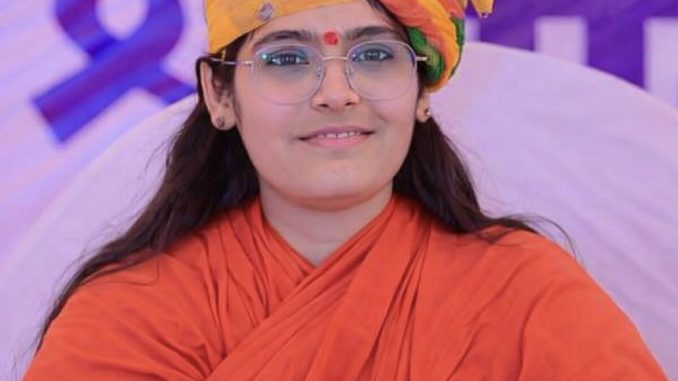
Sadhvi Prem Baisa was an Indian Hindu spiritual preacher, kathavachak, and devotional singer from Rajasthan, widely recognized for her Shrimad Bhagwat Katha discourses and bhakti-centered teachings rooted in Sanatan Dharma. Emerging from a deeply religious upbringing, she rose to prominence at a young age through her powerful narration style, devotional music, and moral messaging. Her life and work reflected a blend of traditional spiritual practice and modern outreach, while her untimely death in January 2026 brought her story into national focus.
Sadhvi Prem Baisa Early Life
Sadhvi Prem Baisa was born in Pareu village of the Balotra region in Barmer district, Rajasthan, into a family with strong religious and cultural foundations. Her early childhood was marked by profound personal loss, as her mother passed away when she was still very young. This event played a decisive role in shaping the spiritual direction of her life.
Following this loss, she came under the guidance of her father and spiritual mentors, who introduced her to a disciplined religious environment. She spent her formative years in and around ashram settings, including Gurukripa Ashram in Jodhpur, where she was immersed in devotional practices, scripture, and spiritual discipline from an early age.
During these years, she showed a natural inclination toward spirituality, storytelling, and devotional expression. Her early exposure to religious life laid the foundation for her future role as a kathavachak and public spiritual figure.
Sadhvi Prem Baisa Educational Background
Sadhvi Prem Baisa’s education followed a traditional spiritual path rather than a conventional academic trajectory. Her learning was rooted in the guru–shishya parampara, where spiritual knowledge is transmitted directly through mentors within an ashram-based environment.
Her education included the study of Hindu scriptures, with particular emphasis on the Shrimad Bhagwat Purana, along with training in religious philosophy, moral teachings, and devotional practices. She also received formal instruction in katha narration, bhajan singing, and the oral traditions central to Hindu religious discourse.
This spiritually grounded education emphasized memorization, interpretation, and public recitation, helping her develop strong communication skills, clarity of expression, and confidence in addressing large audiences. These foundations played a crucial role in shaping her public identity as a sadhvi and preacher.
Sadhvi Prem Baisa Career
Sadhvi Prem Baisa built her career as a Hindu spiritual preacher, kathavachak, and devotional singer, gaining recognition at a relatively young age for her emotive storytelling and devotional depth. She began conducting Shrimad Bhagwat Katha programs across Rajasthan, where her ability to connect scripture with everyday moral values quickly attracted large gatherings of devotees.
Her discourses were characterized by clear articulation of Sanatan Dharma principles, emotional engagement, and an emphasis on devotion, discipline, and ethical living. As her reputation grew, she was invited to religious events, temples, and community gatherings across multiple regions, establishing herself as a prominent female voice in public religious discourse.
Alongside live programs, she expanded her reach through digital platforms, especially Instagram, where she shared devotional messages, bhajan excerpts, and reflections on faith and social responsibility. This modern outreach significantly increased her visibility and helped her connect with younger audiences.
She was also associated with social and service-oriented initiatives, promoting moral awareness and community values through her spiritual platform. Over time, she became widely known as a “Bal Sadhvi,” reflecting her early and lifelong dedication to spiritual life.
Sadhvi Prem Baisa Controversies and Viral Video
In mid-2025, Sadhvi Prem Baisa became the subject of intense public controversy after a video involving her circulated widely on social media. The clip, recorded earlier but shared out of context, quickly went viral and sparked widespread speculation and moral scrutiny.
The video showed her in close physical proximity to a man, leading to allegations that questioned her personal conduct and spiritual identity. The controversy escalated due to repeated circulation of the clip with misleading narratives, drawing sharp reactions from sections of the public.
In response, she publicly clarified that the individual in the video was her father and spiritual guardian, and stated that the footage had been deliberately misrepresented to defame her. She strongly denied all allegations and described the incident as a targeted attempt to malign her character. In an emotional declaration of her innocence, she expressed willingness to undergo an agni pariksha as a symbolic assertion of her moral integrity.
The episode marked a turning point in her public life, exposing her to sustained public pressure and psychological strain, while also highlighting broader issues surrounding social media misuse and character assassination.
Sadhvi Prem Baisa Death and Tributes
Sadhvi Prem Baisa passed away on 28 January 2026 in Jodhpur, Rajasthan, under circumstances that drew widespread public attention. She was taken to a private hospital after reportedly complaining of illness and was declared dead on arrival.
The sudden nature of her death, combined with developments such as social media activity from her account after her passing and the circulation of alleged messages, intensified public concern and calls for investigation. Authorities initiated formal procedures, including a post-mortem examination, as supporters and religious groups demanded transparency.
Tributes poured in from devotees, fellow kathavachaks, and members of the religious community. Prayer meetings, bhajan gatherings, and memorial events were held in her honor, with many remembering her as a devoted preacher who dedicated her life to bhakti and spiritual service from a young age.
Sadhvi Prem Baisa Legacy
Sadhvi Prem Baisa left behind a complex and enduring legacy shaped by devotion, public visibility, and controversy. Despite a relatively short career, she emerged as a recognizable spiritual voice whose kathas and bhajans reached thousands of followers.
Her work contributed to sustaining interest in traditional devotional storytelling while adapting it to modern platforms. At the same time, her life and death sparked broader conversations about online harassment, moral policing, and the pressures faced by spiritual figures in the digital age.
She is remembered both as a dedicated kathavachak and as a figure whose story continues to provoke reflection on faith, resilience, and compassion.
Conclusion
Sadhvi Prem Baisa’s life reflected deep spiritual commitment, public service, and the challenges of visibility in a modern, media-driven society. From early immersion in religious learning to national attention in her final years, her journey embodied devotion as well as vulnerability. Her story remains a significant chapter in contemporary spiritual discourse, offering enduring lessons on faith, dignity, and empathy.
Frequently Asked Questions About Sadhvi Prem Baisa
1. Who was Sadhvi Prem Baisa?
She was a Hindu spiritual preacher, kathavachak, and devotional singer from Rajasthan known for Shrimad Bhagwat Katha discourses.
2. Where was she from?
She belonged to Pareu village in the Balotra region of Barmer district, Rajasthan.
3. What was she known for?
She was known for her kathas, bhajans, and bhakti-based teachings rooted in Sanatan Dharma.
4. Did she receive formal education?
Her education followed a traditional spiritual model focused on scripture, devotional music, and oral religious discourse.
5. Why was she called a “Bal Sadhvi”?
She embraced spiritual life from a very young age and gained recognition early.
6. What was the viral video controversy?
A video shared out of context in 2025 led to allegations against her character, which she denied, stating it was misrepresented.
7. When did she die?
She passed away on 28 January 2026 in Jodhpur, Rajasthan.
8. How is she remembered today?
She is remembered for her devotional contributions and as a figure whose life highlights both spiritual dedication and the pressures of public scrutiny.
Read more:
- Laiba Khan Biography: Life, Wedding, Husband and Age
- Sindile Nkangana Biography: Life, Death, Career and Legacy
Be the first to comment