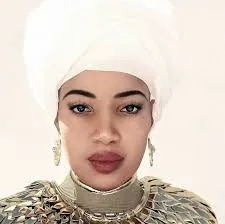
Wuraola Zaynab is a Nigerian public figure whose life has consistently attracted national attention through her ties to both traditional royalty and modern political leadership. Born Zaynab Otiti Obanor, she later became widely recognized as Wuraola Zaynab a name that embodies a journey of visibility, transformation, and cultural resonance within Nigeria’s public sphere.
Her rise to prominence began in 2016 with her marriage to the Ooni of Ife, one of Nigeria’s most revered traditional rulers. That union placed her firmly in the cultural and media spotlight, subjecting her to a level of public criticsm rarely experienced by private citizens. Although the marriage ended in 2017, it established her as a familiar presence on the Nigerian Internet space.
Years later, she once again became a subject of widespread discussion following her marriage to George Akume, Nigeria’s Secretary to the Government of the Federation. Their union, solemnized on December 24, 2025, marked the start of another defining chapter in her life, positioning her at the crossroads of tradition and contemporary governance.
Wuraola Zaynab Profile Summary
| Field | Details |
|---|---|
| Full Name (Birth Name) | Zaynab Otiti Obanor |
| Public Name | Wuraola Zaynab |
| Nationality | Nigerian |
| Former Royal Title | Olori Wuraola (by marriage) |
| Royal Marriage | Married the Ooni of Ife in March 2016 |
| Royal Marriage Duration | Approximately 17 months |
| Separation | Publicly confirmed in 2017 |
| Current Spouse | George Akume |
| Date of Current Marriage | December 24, 2025 |
| Current Family Affiliation | Dajoh family of Mbakor, Benue State |
| Name Used After 2025 Marriage | Queen Zaynab Ngohemba-George Akume Dajoh (ceremonial/media contexts) |
| https://www.instagram.com/hhzaynab/ |
Wuraola Zaynab Early Identity and Background
Wuraola Zaynab, born Zaynab Otiti Obanor, carries a name that reflects her original personal and family identity. A Nigerian by nationality, she spent much of her early life outside the public eye, with limited documentation of her private experiences.
As time passed, the name Wuraola Zaynab emerged as the more recognized form of her identity, particularly within the media. It became closely tied to her evolving public image and the significant transitions in her life, most notably her entry into royal marriage, which firmly established her presence in Nigeria’s cultural and social discourse.
Wuraola Zaynab Royal Marriage and Rise to Public Recognition
Wuraola Zaynab rose to national and international attention in March 2016, when she married the Ooni of Ife, one of the most revered traditional rulers in Nigeria and the spiritual leader of the Yoruba people. Upon this marriage, she assumed the title Olori Wuraola, a designation that placed her within the historic and cultural framework of the Ife monarchy.
This marriage marked a significant turning point in her life. From that moment, she transitioned from relative anonymity into the center of public attention. As Olori, she became a visible representative of royalty, tradition, and cultural continuity. Her public appearances, ceremonial presence, and association with the ancient throne of Ife drew widespread interest from both national and international audiences.
The marriage also brought intense media scrutiny. As a royal consort, her life, conduct, and public image were frequently discussed, interpreted, and analyzed by the public. The expectations placed upon her were shaped by centuries-old traditions, modern media narratives, and contemporary social values. During this period, Wuraola Zaynab became a symbol of the intersection between tradition and modern Nigerian society.
However, the royal marriage lasted for approximately 17 months. In 2017, the separation between Wuraola Zaynab and the Ooni of Ife was publicly confirmed. The announcement marked the end of her formal role as Olori, but not the end of public interest in her life. The separation was widely discussed and generated significant public conversation, reinforcing her position as a notable figure in Nigeria’s public consciousness.
Wuraola Zaynab Life After the Royal Marriage
After her separation was confirmed in 2017, Wuraola Zaynab entered a new chapter defined by greater privacy. Stepping away from the formal structures of the Ife monarchy, she withdrew from the intense public exposure that had marked her years as Olori. This period signaled a deliberate shift from ceremonial visibility toward personal renewal and discretion.
Even in relative seclusion, her name continued to surface in conversations about royalty, culture, and public life. She remained closely associated with her former royal role, often referenced in connection to that chapter of her journey. At the same time, occasional reports linked her to humanitarian causes and women-centered initiatives, though these mentions were typically broad and not tied to formally established positions.
Having lived within one of Nigeria’s most influential traditional institutions, she faced the challenge of redefining her identity beyond that role. Her ability to preserve dignity and composure throughout this process contributed to the respectful tone with which she is still regarded in Nigeria.
Wuraola Zaynab Marriage to Senator George Akume
A new chapter in Wuraola Zaynab’s life began with her marriage to George Akume, Nigeria’s Secretary to the Government of the Federation and a prominent national political figure. The marriage took place on December 24, 2025.
Although the union was later publicly announced, the marriage itself was formalized on that date in accordance with family and cultural traditions. Following the public disclosure, Wuraola Zaynab was formally welcomed into the Dajoh family of Mbakor, Benue State, a family recognized within Tiv society. This welcoming ceremony symbolized her acceptance into her husband’s lineage and cultural heritage.
After the marriage, she began to be referred to in some ceremonial and media contexts as Queen Zaynab Ngohemba-George Akume Dajoh, a name reflecting both marital union and cultural integration. As with her previous transition into royalty, this name carries symbolic significance, representing belonging, status, and identity within a specific social framework.
The marriage attracted significant national attention due to the prominence of both individuals. For Wuraola Zaynab, it marked another transformation—this time from former royal consort to the spouse of a senior figure in Nigeria’s federal government. The union further solidified her place in the public narrative as a woman whose life has intersected with major centers of traditional and political power.
Conclusion
Wuraola Zaynab’s life story is one of transformation, resilience, and cultural significance. Born as Zaynab Otiti Obanor, she rose to prominence through marriage into traditional royalty, experienced the challenges of public scrutiny, and later entered a new chapter through marriage into national political leadership. Each phase of her life reflects a different dimension of Nigerian society, from ancient monarchy to modern governance.
Her biography illustrates how personal lives can become intertwined with national narratives, and how individuals can remain relevant through dignity and adaptation rather than constant public exposure. As her story continues to unfold, Wuraola Zaynab remains a compelling figure—one whose life reflects both the weight of tradition and the realities of contemporary public life.
Frequently Asked Questions About Wuraola Zaynab
Who is Wuraola Zaynab?
Wuraola Zaynab is a Nigerian public figure whose life has drawn national attention because of her close connections to traditional royalty and federal political leadership. Born Zaynab Otiti Obanor, she became widely known under the name Wuraola Zaynab as her public profile expanded.
What is Wuraola Zaynab’s real or birth name?
Her birth name is Zaynab Otiti Obanor. The name Wuraola Zaynab emerged later and became the identity most Nigerians recognize, particularly during and after her time in the public eye.
Why is Wuraola Zaynab widely known in Nigeria?
She is best known for marrying into two of Nigeria’s most influential spheres. First, her marriage to the Ooni of Ife placed her at the heart of traditional royalty. Years later, her marriage to George Akume, Nigeria’s Secretary to the Government of the Federation, renewed public interest in her life.
When did she marry the Ooni of Ife?
Wuraola Zaynab married the Ooni of Ife in March 2016. Following that marriage, she was known by the royal title Olori Wuraola, a name that became widely familiar across the country.
How long did the royal marriage last?
The royal marriage lasted for about 17 months. The separation was publicly confirmed in 2017, bringing her formal role as a royal consort to an end.
What happened after her separation from the Ooni of Ife?
After the separation, she stepped away from intense public exposure and chose a more private life. While she was no longer active in royal duties, public interest in her did not disappear, largely because of her former status and the visibility of that chapter of her life.
Who is Wuraola Zaynab married to now?
She is married to Senator George Akume, a senior Nigerian statesman who serves as the Secretary to the Government of the Federation.
When did Wuraola Zaynab marry George Akume?
The marriage took place on December 24, 2025.
Where was she formally welcomed after the marriage?
Following the public announcement, Wuraola Zaynab was formally welcomed into the Dajoh family of Mbakor, Benue State, in line with family and cultural traditions.
Does Wuraola Zaynab hold any official political or royal position?
No, she does not hold any official political office or formal royal title. Her public profile comes from her personal life and associations, not from an institutional role.
What name is she known by after her 2025 marriage?
In some ceremonial and media contexts, she has been referred to as Queen Zaynab Ngohemba-George Akume Dajoh, reflecting her marriage and integration into her husband’s family.
Is Wuraola Zaynab active in public or political life today?
She maintains a measured and selective public presence. She is not involved in day-to-day politics and appears mainly in family, cultural, or socially significant settings.
Why does her biography continue to attract public attention?
Her story continues to resonate because it sits at the intersection of tradition, power, and modern Nigerian society. Her life reflects how personal journeys can become part of broader national conversations, especially when they involve institutions as influential as royalty and federal leadership.
Read more:
- Karoline Leavitt Biography: Age, Career, Husband, and Latest News
- Mora Namdar Biography: Age, Background, Career, and Personal Life
Be the first to comment